Keeping Children with Chronic Conditions Protected through Immunization
Last Updated04/28/2026
Children living with chronic health conditions — such as diabetes, heart disease, kidney disease and lung diseases like asthma — face a higher risk of serious complications from common infections like COVID-19, flu, RSV, and pneumococcal disease. While these illnesses can be mild for some, they can lead to a hospital stay, long-term health impacts, or even life-threatening outcomes for children with ongoing health conditions. Understanding these risks can help guide timely vaccination to help keep children protected against severe illness.
CVEEP held a discussion exploring the critical role of vaccines in keeping children most at risk healthy. Pediatric health and vaccine experts shared why children with chronic health conditions are at increased risk for severe outcomes, provided an overview of vaccine recommendations for children, and offered best practices for providers, parents, and caregivers to protect these vulnerable populations.
Panelists included:
David Hill, MD, FAAP, Co-Host of “Pediatrics On Call” Podcast and Spokesperson, American Academy of Pediatrics (AAP)
Patricia (Patsy) Stinchfield, RN, MS, CPNP, Immediate Past-President, National Foundation for Infectious Diseases
Moderator:Serese Marotta, Deputy Chief Executive Officer, Vaccinate Your Family
Pediatrician Dr. David Hill highlights how vaccines can teach children’s immune systems how to safely fight off infectious diseases before they even encounter them.
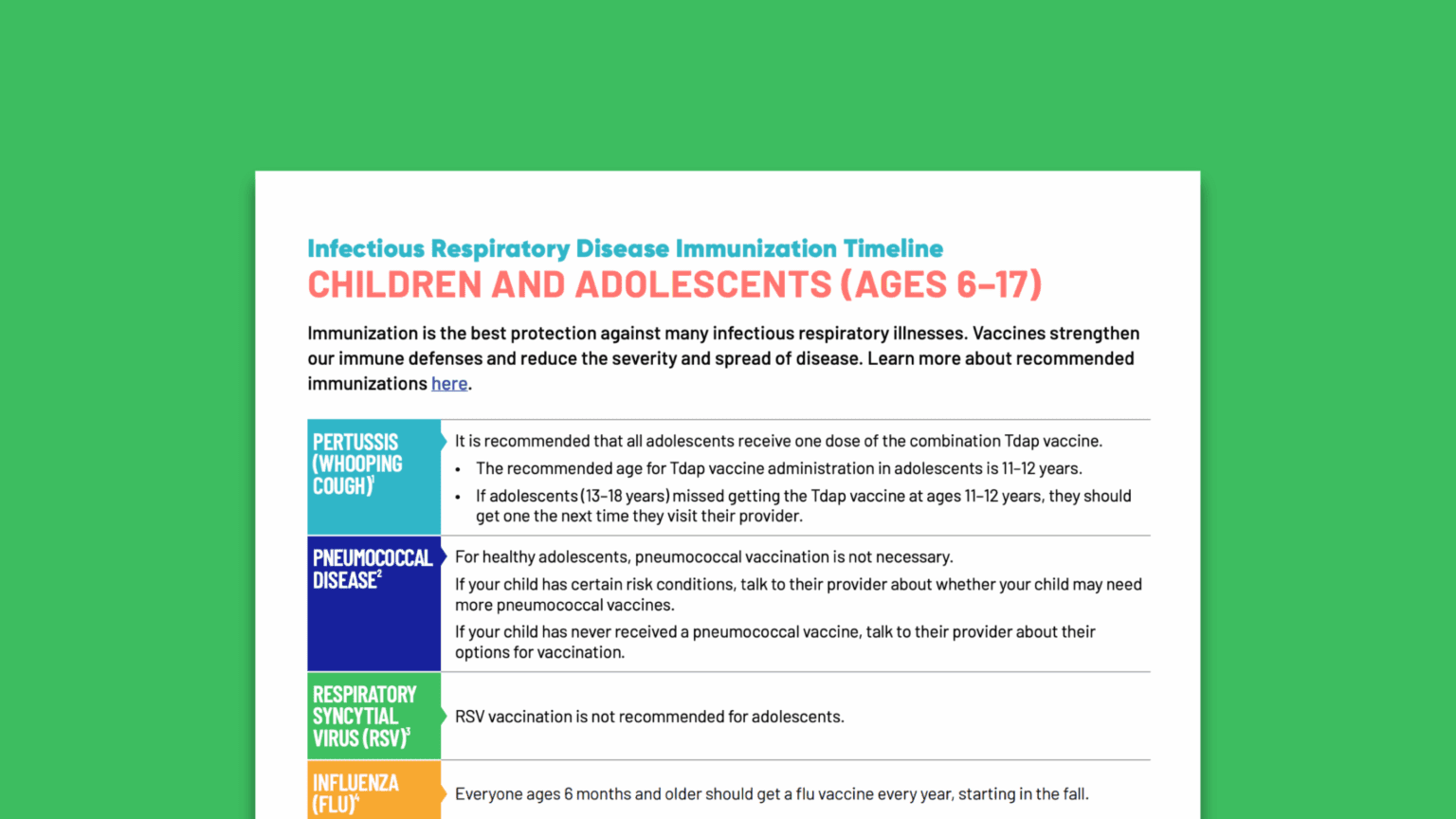
Infectious Respiratory Disease Immunization Timeline: Children and Adolescents (Ages 6-17)
Immunization is the best protection against many infectious respiratory illnesses. Vaccines strengthen our immune defenses and reduce the severity and spread of disease.
Last Updated12/23/2025
Infectious Respiratory Disease Immunization Timeline: Children and Adolescents (Ages 6-17)
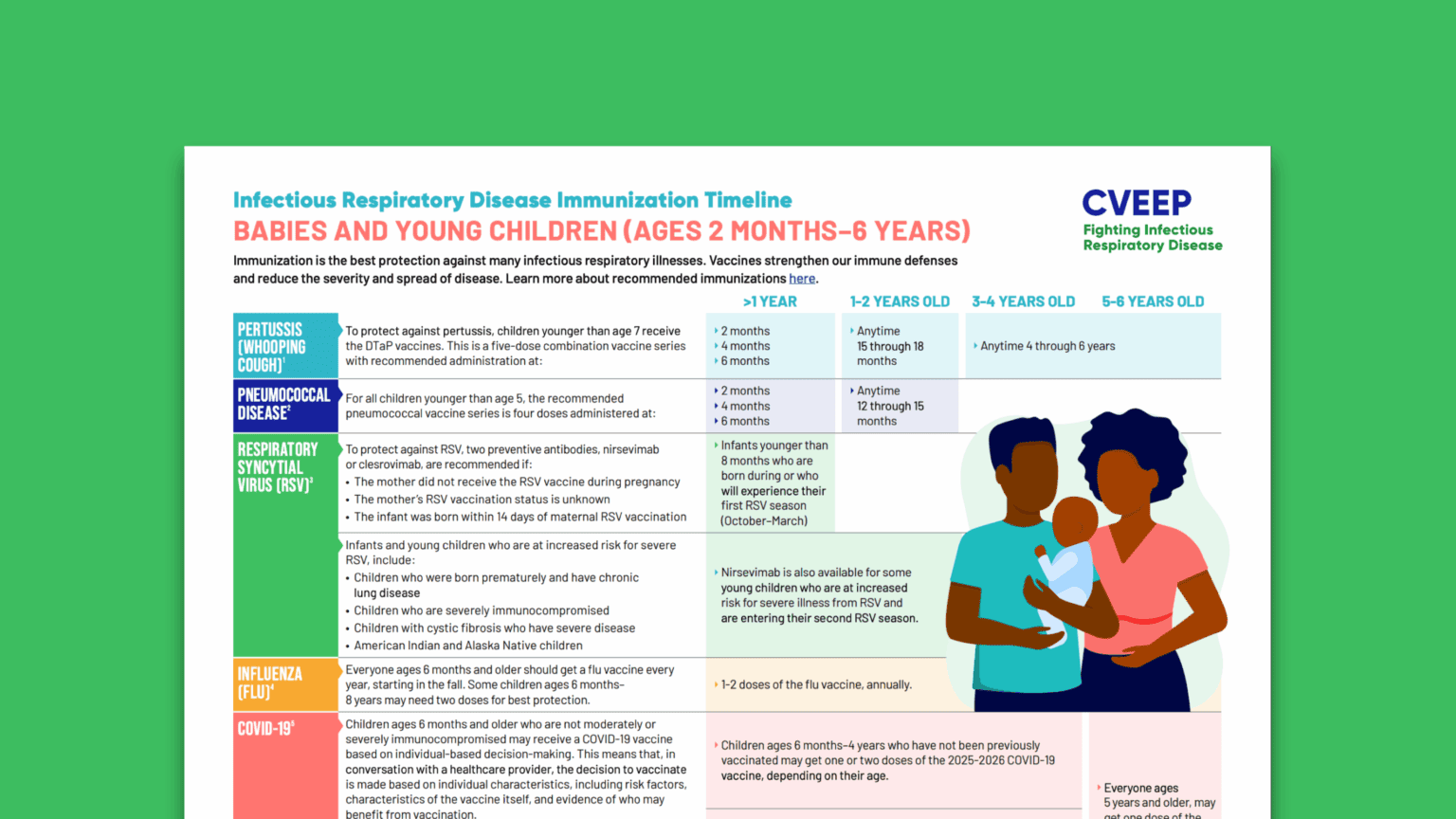
Infectious Respiratory Disease Immunization Timeline: Babies and Young Children (Ages 2 Months-6 Years)
Immunization is the best protection against many infectious respiratory illnesses. Vaccines strengthen our immune defenses and reduce the severity and spread of disease.
Last Updated12/23/2025
Infectious Respiratory Disease Immunization Timeline: Babies and Young Children (Ages 2 Months-6 Years)
Immunization is the best protection against many infectious respiratory illnesses. Learn more about the timelines for vaccination against infectious respiratory diseases for different groups of individuals.
This respiratory illness season, families in communities around the country face vaccine-preventable diseases that can cause serious illness in children — from the flu, COVID-19, whooping cough, pneumococcal disease, and RSV, to measles. Meanwhile, recent data show that vaccination rates in children continue to decline, leaving them more vulnerable and susceptible to severe illness.
Given this landscape, many parents and caregivers have questions about pediatric vaccines, including access through the federal Vaccines for Children program. This is a critical moment for vaccine champions to reinforce focus on pediatric vaccine uptake and strategies that help protect against severe respiratory illness.
Experts in pediatric care, public health, and vaccine policy discussed the critical role that respiratory vaccines play in keeping children safe and practical tools for supporting childhood vaccination during respiratory illness season and beyond.
Panelists included:
Michelle Fiscus, MD, FAAP, Chief Medical Officer, Association of Immunization Managers (AIM)
James Campbell, MD, MS, Vice Chair, Committee on Infectious Diseases (COID), American Academy of Pediatrics (AAP)
Moderator: Stacy Buchanan, DNP, APRN, CPNP-PC, Chair, National Association of Pediatric Nurse Practitioners (NAPNAP) Immunization Special Interest Group
The Benefits of Immunization for High-Risk Populations
Older adults, young children and people with certain health conditions are at greater risk for severe respiratory disease. Vaccines provide important protection.
Last Updated03/12/2025
The Benefits of Immunization for High-Risk Populations
What to Know About Pneumococcal Vaccines for Children and Adolescents
Pneumococcal disease is dangerous for children and adolescents, and those under 5 years of age are especially at risk. Getting the pneumococcal vaccine helps prevent severe infections that can lead to hospitalization or even death.
Last Updated03/06/2025
What to Know About Pneumococcal Vaccines for Children and Adolescents
Vaccines | Childhood | Cost and Coverage | COVID-19
Examining the Vaccines for Children Program and Its Role in Providing Kids with COVID-19 Vaccine Coverage
Last Updated11/11/2023
Vaccines are among the most effective ways to help protect children from many serious and potentially deadly diseases. Unfortunately, the number of children in the U.S. who are up to date on routine vaccinations has declined in recent years, putting them at increased risk for infection. This continued backslide in childhood immunizations and low rates of COVID-19 vaccination is especially alarming as we approach winter months when cases of respiratory illness typically increase. With updated COVID-19 vaccines now available, there is an opportunity to reinforce the importance of pediatric vaccination and answer parents’ questions about recommended vaccines, coadministration, and coverage when administering annual flu vaccines or during well-child visits.
To help address these and other questions, the CVEEP and the National Foundation for Infectious Diseases (NFID) co-hosted an online event to examine how the federally funded Vaccines for Children (VFC) Program covers payment of COVID-19 vaccines for children. During the 60-minute webinar, panelists discussed the importance of VFC, including eligibility and how the program covers updated COVID-19 vaccines, and proven strategies for combatting disparities in childhood immunization rates.
Panelists included:
Peter Marks, MD, PhD, Director, Center for Biologics Evaluation and Research (CBER), Food and Drug Administration (FDA)
Demetre Daskalakis, MD, MPH, Acting Director, National Center for Immunization and Respiratory Diseases (NCIRD), Centers for Disease Control and Prevention (CDC)
Michelle Fiscus, MD, Chief Medical Officer, Association of Immunization Managers
The discussion was moderated by Patricia (Patsy) A. Stinchfield, RN, MS, CPNP, NFID President, past voting member and current liaison to the CDC Advisory Committee on Immunization Practices (ACIP) representing the National Association of Pediatric Nurse Practitioners (NAPNAP).