The Benefits of Immunization for High-Risk Populations
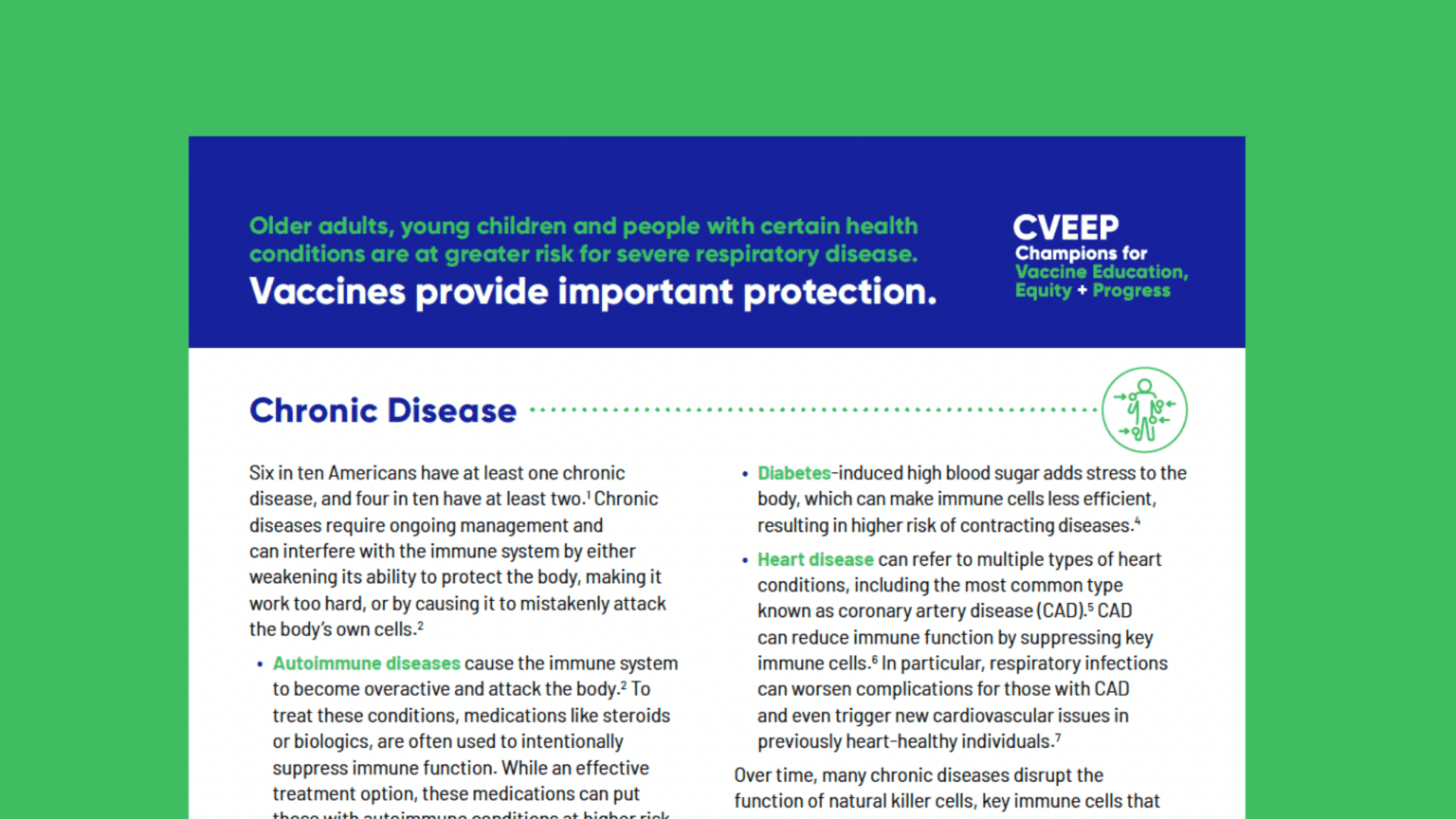
Older adults, young children and people with certain health conditions are at greater risk for severe respiratory disease. Vaccines provide important protection.
Last Updated03/12/2025
The Benefits of Immunization for High-Risk Populations
RSV Vaccines: Insights for At-Risk and Older Adults
Last Updated12/10/2024
Last year’s availability of respiratory syncytial virus (RSV) vaccines marked a critical step in science and public health. Previously, no widespread prevention option existed to protect those at increased risk for RSV, including older adults, from this serious infectious respiratory disease. In the year since RSV vaccines were first introduced, real world evidence has shown that they are effective in preventing serious illness for individuals 60 years and older. However, despite the progress made towards RSV prevention, RSV vaccine uptake continues to remain low in older adults.
As we continue into peak respiratory season and beyond, CVEEP hosted an expert-led conversation on updated risk-based RSV vaccine guidance for older adults, the value of vaccination for adults at highest risk for severe RSV disease, and other important considerations to help promote vaccine uptake across communities.
Speakers included:
Amadea Britton, MD, Medical Officer, Coronavirus and Other Respiratory Viruses Division, Co-Lead of the Advisory Committee on Immunization Practices Adult RSV Vaccine Work Group, Centers for Disease Control and Prevention
Lynn Albizo, JD, Chief Public Policy Officer at the Immune Deficiency Foundation
Sara Maloney, MPA, Program Director of the Aging and Disability Vaccination Collaborative and the Center for Dementia Respite Innovation, USAging
The discussion was moderated by Karyne Jones, President and Chief Executive Officer of the National Caucus and Center on Black Aging, a convener of CVEEP.
Respiratory Season is Here: Everything You Need to Know About Fall Vaccines
Last Updated11/08/2024
As respiratory illness season is now underway, it’s crucial for healthcare professionals and the public to stay informed on the latest guidance regarding COVID-19, flu, and RSV vaccines. The first featured a fireside chat featuring Dr. Peter Marks of the FDA, who shared key regulatory updates and highlighted the critical role of vaccines in preventing severe illness during respiratory season and beyond.
Following the fireside chat, a panel of experts analyzed the recent summer COVID-19 surge and outline what individuals need to know about receiving their updated vaccines. The panel also discussed the safety, efficacy, and feasibility of co-administering the COVID-19, flu, and RSV vaccines, while examining the current trends in vaccine uptake. By stressing the importance of timely vaccination, the panelists offered practical insights and strategies to ensure widespread protection this fall.
Panelists include:
Peter Marks, MD, PhD, Director, Center for Biologics Evaluation and Research (CBER), FDA
Uché Blackstock, MD, Emergency Physician, Founder & CEO of Advancing Health Equity
Synovia Moss, MPA, CEO/Managing Partner, Moss Consulting & Management Group, National Project Manager, Good Health Women’s Immunization Networks (Good Health WINs), National Council of Negro Women
Kayla McFeely, PharmD, Vice President, Pharmacy Care, Health & Wellness Programs, National Association of Chain Drug Stores (NACDS)
Sue Peschin, MS, President and CEO, Alliance for Aging Research (moderator)
Supporting Equitable Access to Respiratory Vaccines: Best Practices and Implementation of Risk-Based Recommendations
Last Updated10/15/2024
Risk-based vaccine recommendations are an important mechanism by which public health authorities provide guidance, encourage vaccination, and reach vulnerable populations. That said, implementation of risk-based recommendations can prove challenging.
As we navigate this year’s respiratory illness season, Champions for Vaccine Education, Equity and Progress (CVEEP) held a discussion focused on best practices to support equitable access to respiratory vaccines, which will include an overview of CDC’s Advisory Committee on Immunization Practices (ACIP) recommendations for respiratory vaccines, and considerations specific to risk-based recommendations. Featuring insights from leading public health experts, clinicians, and government officials, the event explored what is working, where there might be barriers to implementation and gaps in communication and, how the public health community can work together to ensure all individuals are able to receive the vaccines they need.
Panelists included:
Karyne Jones, President and CEO of the National Caucus and Center on Black Aging and convening member of CVEEP
Dr. Reed Tuckson, Co-Founder of the Black Coalition Against COVID and Co-Founder of the Coalition For Trust in Health & Science
Dr. Evelyn Twentyman, Senior Advisor for Vaccine Strategy, National Center for Immunization and Respiratory Diseases, CDC
The discussion was moderated by Amy Pisani, CEO of Vaccinate Your Family.
Staying up to date with recommended vaccines is your best first line of defense; however, infections may still occur, so it is important to act quickly at the first sign of symptoms or a positive test. If you begin to experience symptoms, there are testing and treatment options available for you.
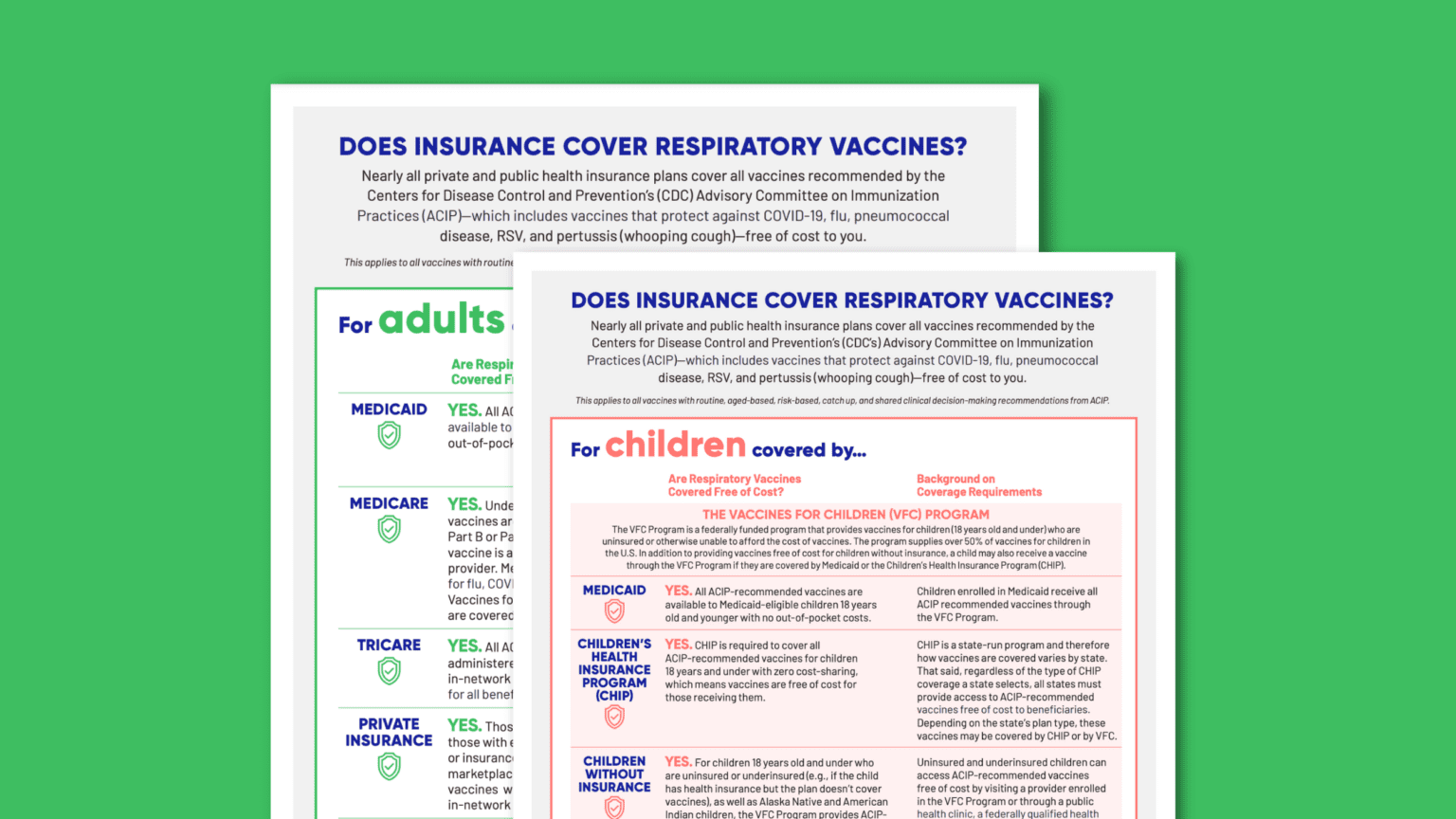
Nearly all private and public health insurance plans cover all vaccines recommended by the CDC’s ACIP—which includes vaccines that protect against COVID-19, flu, pneumococcal disease, RSV, and pertussis (whooping cough)—free of cost to you.
What to Know About Maternal Vaccines This Respiratory Season
Last Updated08/22/2024
For pregnant people, maternal vaccines are critical to prenatal care and help protect infants during their first few months of life when newborns are vulnerable to infectious respiratory diseases. As we approach the 2024-2025 respiratory illness season, four vaccines are available to help protect infants, including newly available prevention options. Yet, despite the important role of vaccines during pregnancy, rates of maternal vaccine uptake remain suboptimal.
To further this discussion, Champions for Vaccine Education, Equity and Progress (CVEEP) hosted a conversation on current maternal vaccine guidance, including the maternal RSV vaccine, and potential solutions to address barriers that can impact access to recommended vaccines. The discussion featured provider perspectives across the healthcare continuum and addressed what individuals and organizations can do to help promote maternal vaccination.
Panelists included:
Pragna Patel, MD, MPH, Chief Medical Officer, Coronavirus and Other Respiratory Viruses Division, National Center for Immunization and Respiratory Diseases, Centers for Disease Control and Prevention (CDC)
Haywood Brown, MD, Vice Dean of Faculty Affairs, Morsani College of Medicine and Professor, Department of Obstetrics & Gynecology, University of South Florida; Former President, American College of Obstetricians and Gynecologists (ACOG)
Michelle Fiscus, MD, FAAP, Chief Medical Officer, Association of Immunization Managers (AIM)
Allison Hill, PharmD, RPh, Director, Practice Implementation & Professional Affairs, American Pharmacists Association (APhA)
Beth Battaglino, RN-C, CEO of HealthyWomen and CVEEP Convener (moderator)