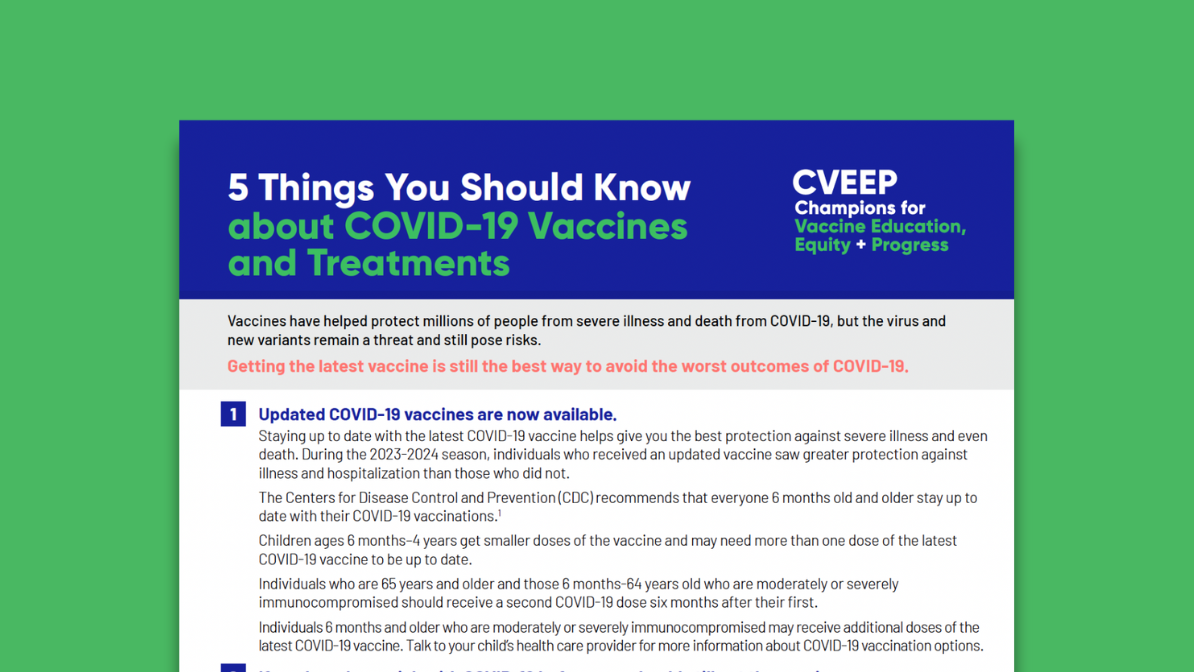
*NOTE: COVID-19 and RSV vaccine recommendations have recently been updated for some populations. This resource will be updated to reflect the CDC’s latest guidance. Because CDC recommendations may impact insurance coverage, you should check with your insurance provider to make sure you’re covered.
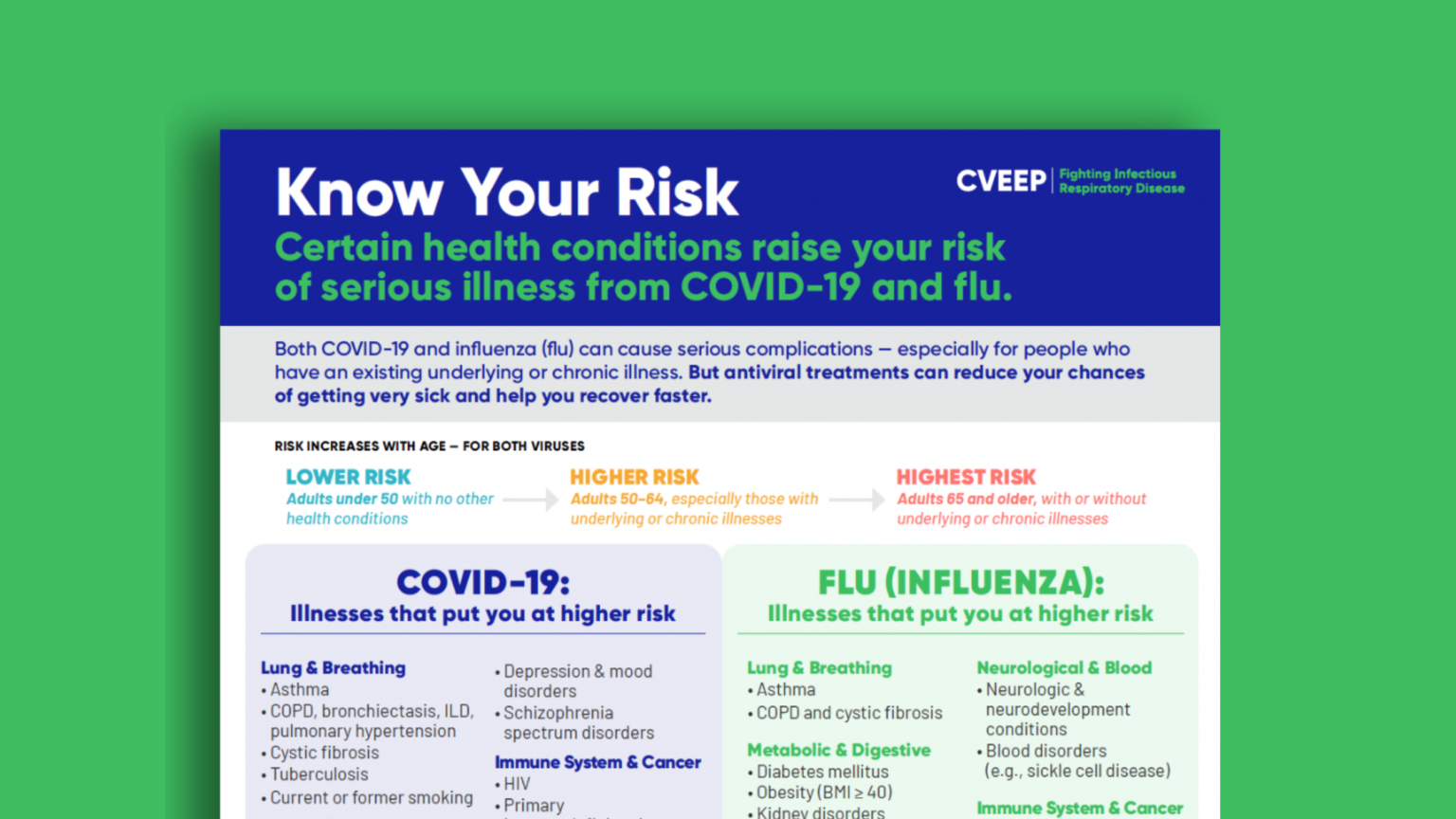
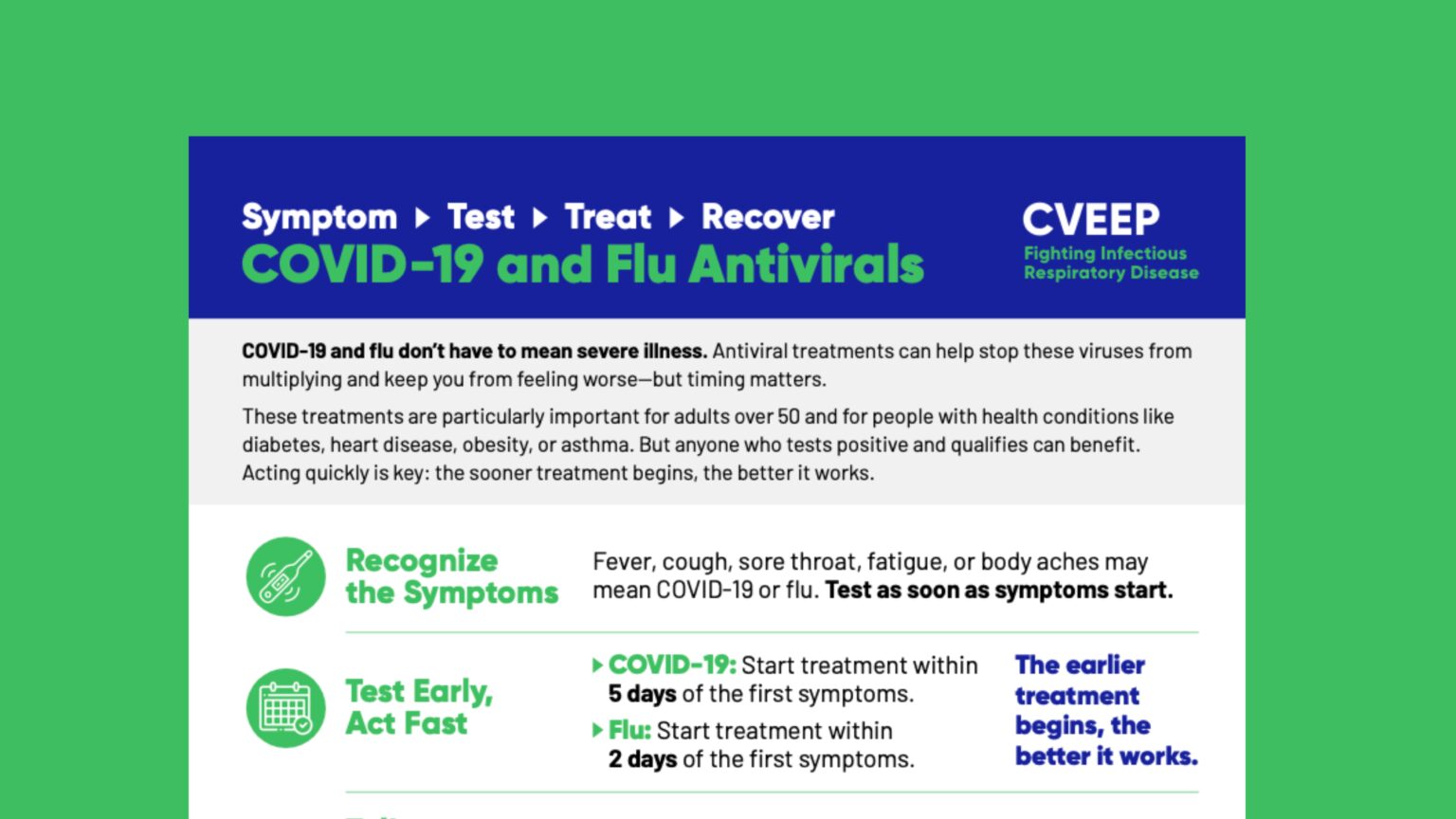
Both COVID-19 and influenza (flu) can cause serious complications — especially for people who have an existing underlying or chronic illness. But antiviral treatments can reduce your chances of getting very sick and help you recover faster.
RISK INCREASES WITH AGE — FOR BOTH VIRUSES
LOWER RISK: Adults under 50 with no other health conditions
HIGHER RISK: Adults 50–64, especially those with underlying or chronic illnesses
HIGHEST RISK: Adults 65 and older, with or without underlying or chronic illnesses
Asthma
• COPD, bronchiectasis, ILD, pulmonary hypertension
• Cystic fibrosis
• Tuberculosis
• Current or former smoking
Metabolic & Digestive
• Diabetes (type 1 and 2)
• Obesity (BMI ≥ 30)
• Chronic kidney disease / dialysis
Heart & Circulation
• Heart disease
• Cerebrovascular / stroke-related disease
Neurological
• Dementia
• Parkinson’s disease
• Depression & mood disorders
• Schizophrenia spectrum disorders
Immune System & Cancer
• HIV
• Primary immunodeficiencies
• Organ or stem cell transplant
• Long-term steroid / immunosuppressant use
• Cancer (including blood cancers)
Other
• Pregnancy & recent pregnancy
• Disabilities, including Down syndrome
• Physical inactivity
Asthma
• COPD and cystic fibrosis
Metabolic & Digestive
• Diabetes mellitus
• Obesity (BMI ≥ 40)
• Kidney disorders
• Liver disorders
• Metabolic disorders (incl. mitochondrial disorders)
Heart & Circulation
• Congenital heart disease, heart failure, coronary artery disease
• History of stroke
Neurological & Blood
• Neurologic & neurodevelopment conditions
• Blood disorders (e.g., sickle cell disease)
Immune System & Cancer
• HIV / AIDS
• Cancer (e.g., leukemia)
• Chemotherapy, radiation, or immunosuppressant use
Other
• Pregnancy & recent pregnancy
• Disabilities, including Down syndrome
• Physical inactivity
Not a complete list of medical conditions. Some treatments may have side effects or interact with other medications you are taking, talk with your healthcare provider to help you make the best choice for your health.
ANTIVIRAL TREATMENTS CAN HELP
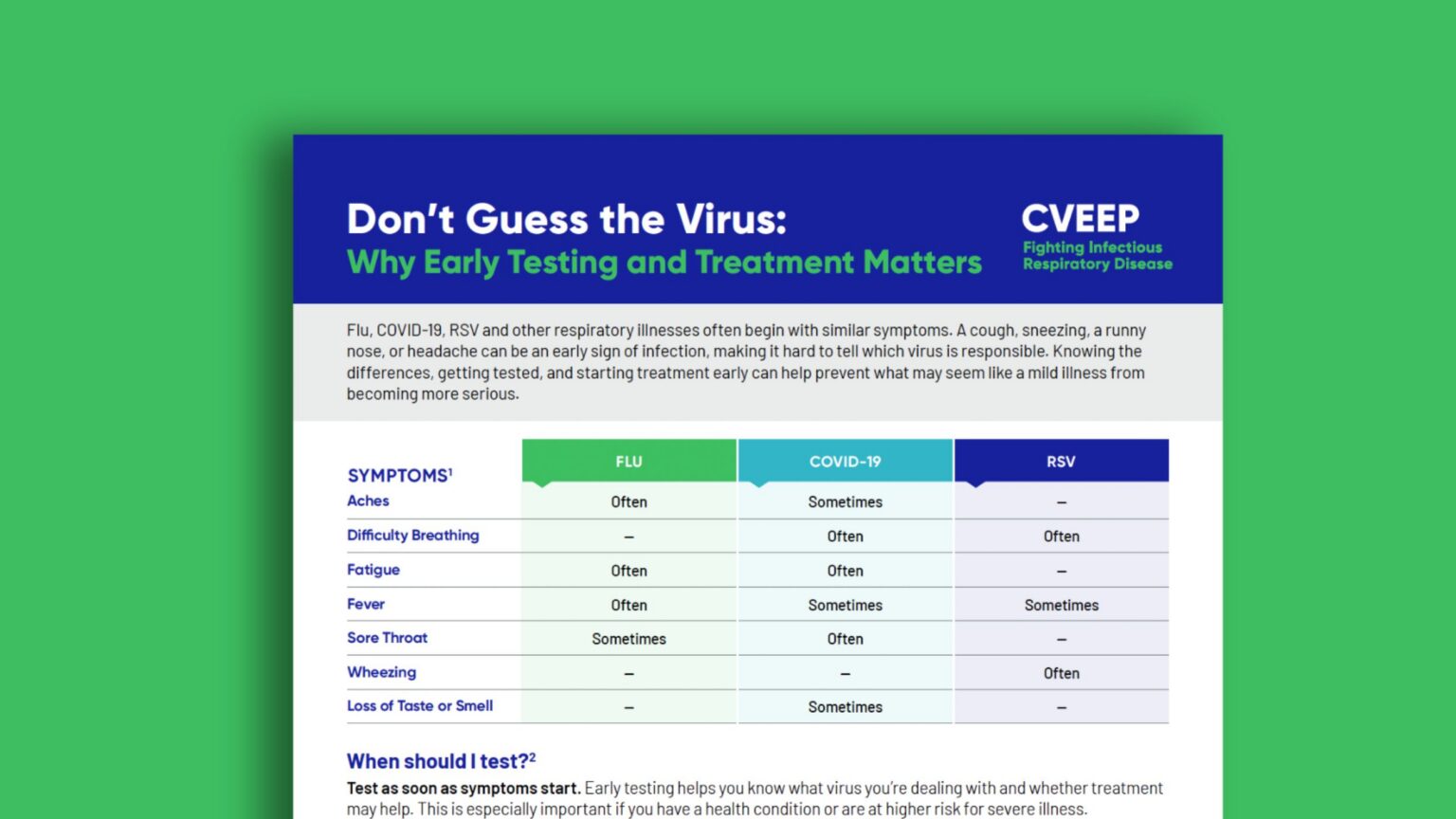
Getting tested and starting an antiviral treatment early can help prevent what may seem like a mild illness from becoming more serious.
STEPS YOU CAN TAKE TO PREVENT SERIOUS ILLNESS
1. Stay up to date on COVID-19 and flu vaccines
2. Talk to your doctor about your personal risk
3. Ask about antiviral options early if you get sick
SOURCES:
cdc.gov/covid/hcp/clinical-care/underlying-conditions.html
cdc.gov/flu/highrisk/index.html
cdc.gov/covid/treatment/index.html
As communities navigate the winter respiratory virus season, state and local health leaders are updating response plans to protect older adults, individuals with underlying medical conditions, and underserved populations. With vaccination rates declining and continued confusion about changing government guidance, the timely use of COVID-19 and influenza antivirals remains a critical, yet often underused, tool to reduce severe illness, preserve hospital capacity, and limit outbreaks.
CVEEP convened a webinar featuring a panel of clinical, public health, and community experts for a discussion of the latest guidance, any anticipated rise in COVID-19 infections, and how linking antiviral use to overall outbreak response plans can strengthen community preparedness. Participants gained practical insights to support testing-to-treatment pathways, align provider and pharmacy coordination, and promote access to care this respiratory season.
Panelists included:
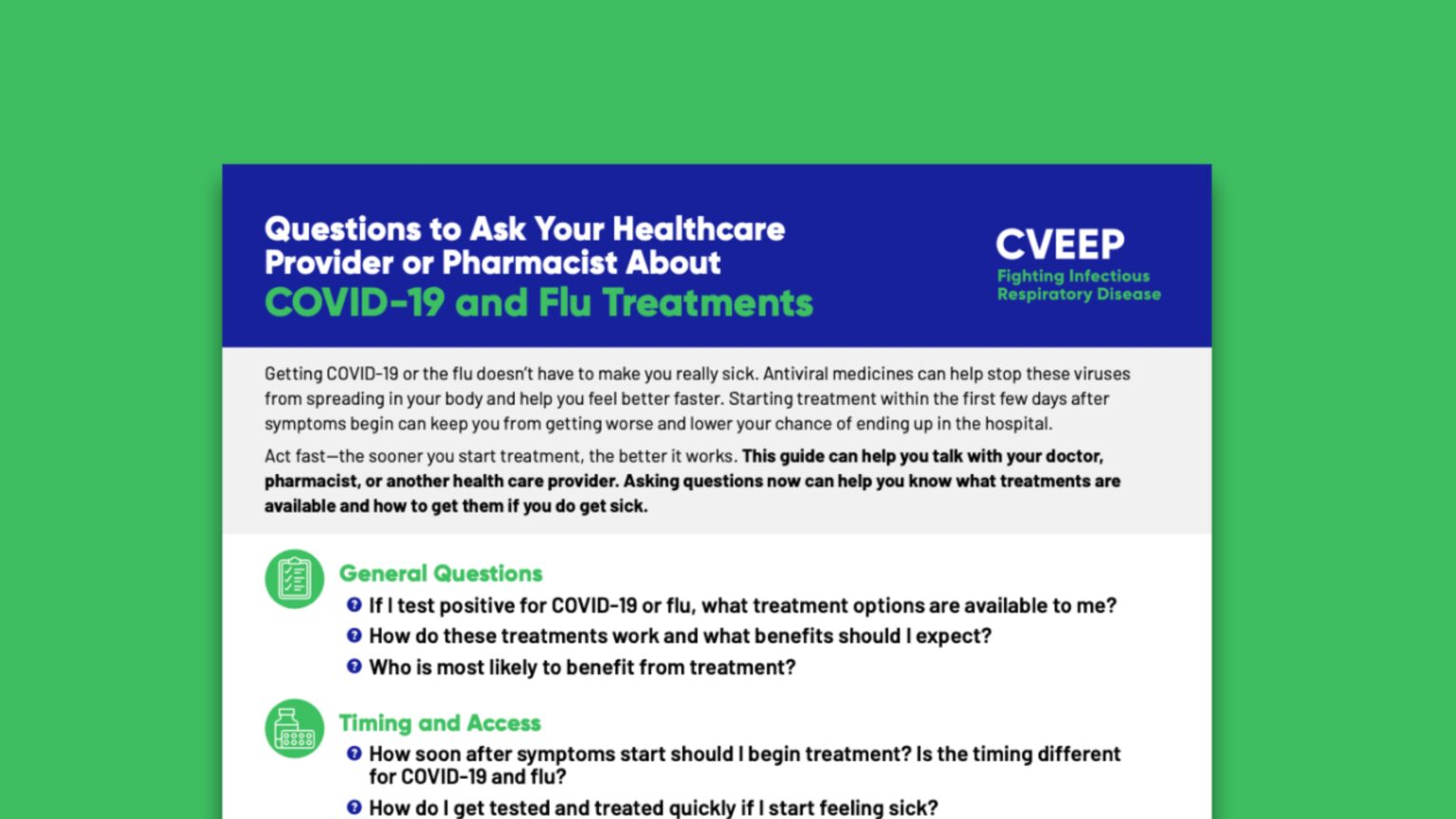

Antiviral treatments are prescription medications that can help the body fight viral infections – easing symptoms, shortening the length of sickness, and lowering the risk of spreading the infection. They’re especially valuable for older adults and other high-risk groups, but data shows a persistent gap between the need for these treatments and actual prescription rates.
The Alliance for Aging Research partnered with CVEEP to host a discussion on antiviral treatments for flu and COVID-19 – who should take them, how they work, the need to start them quickly after an infection, and what people should do if they are sick.
Panelists included: