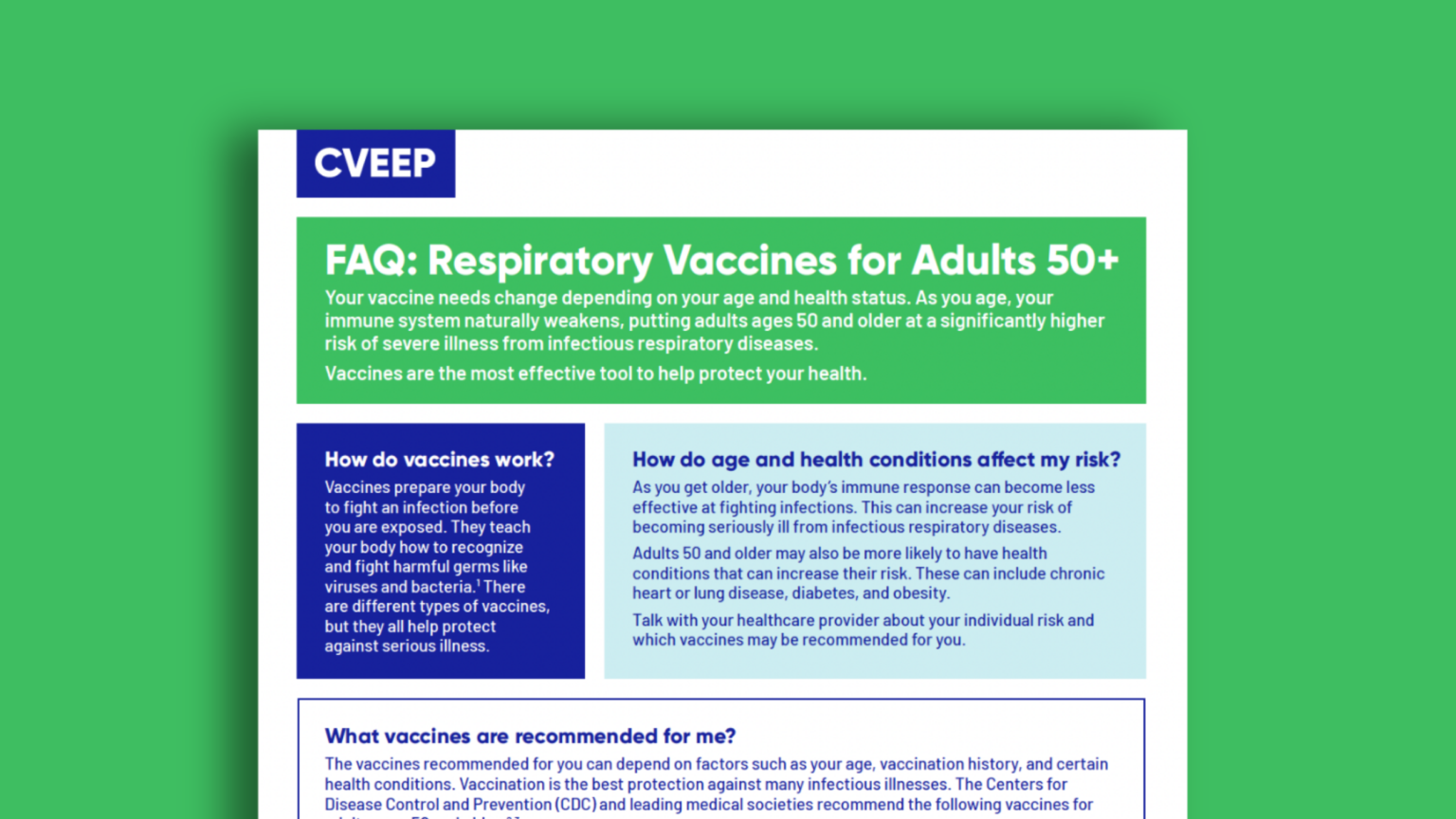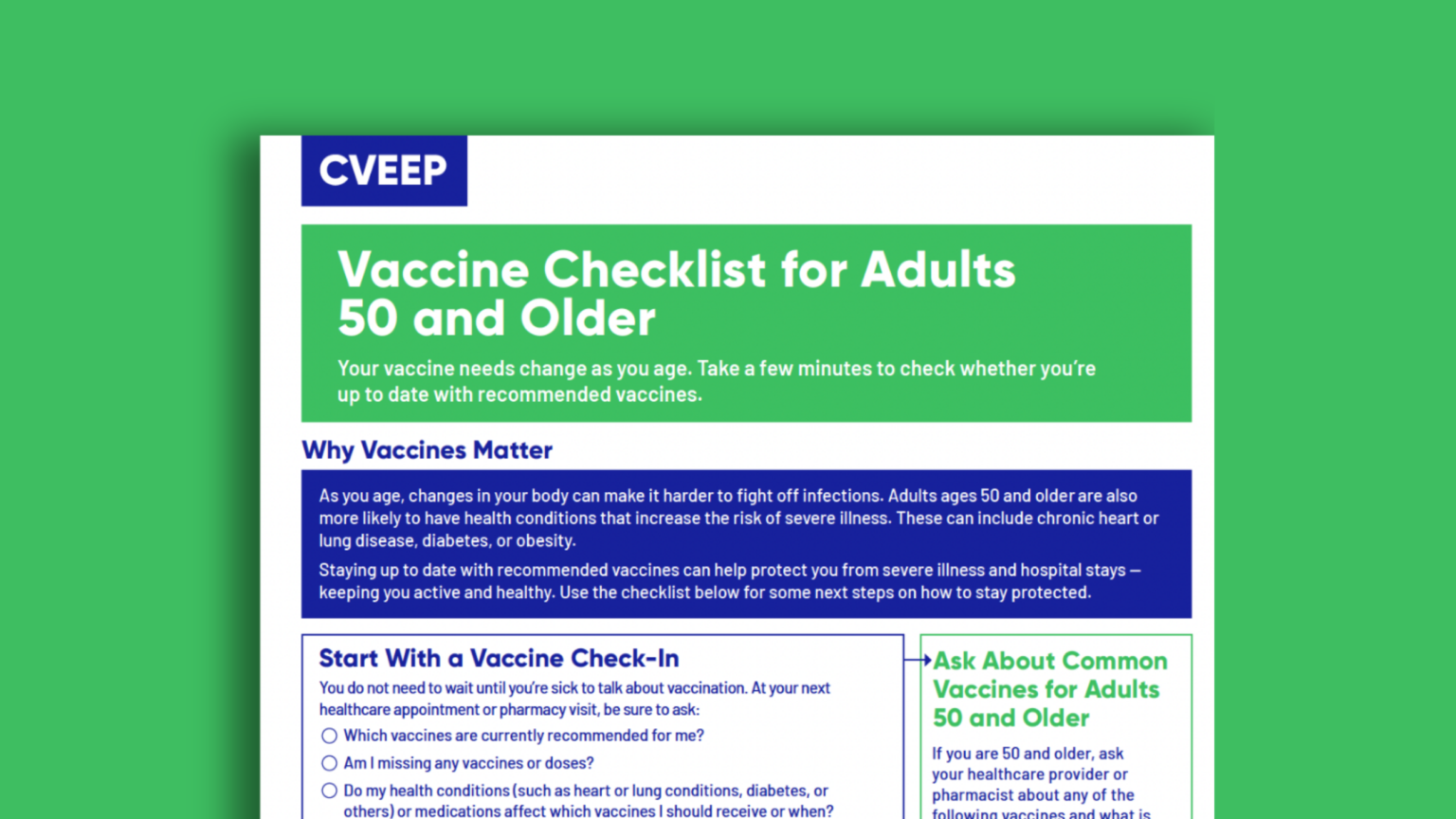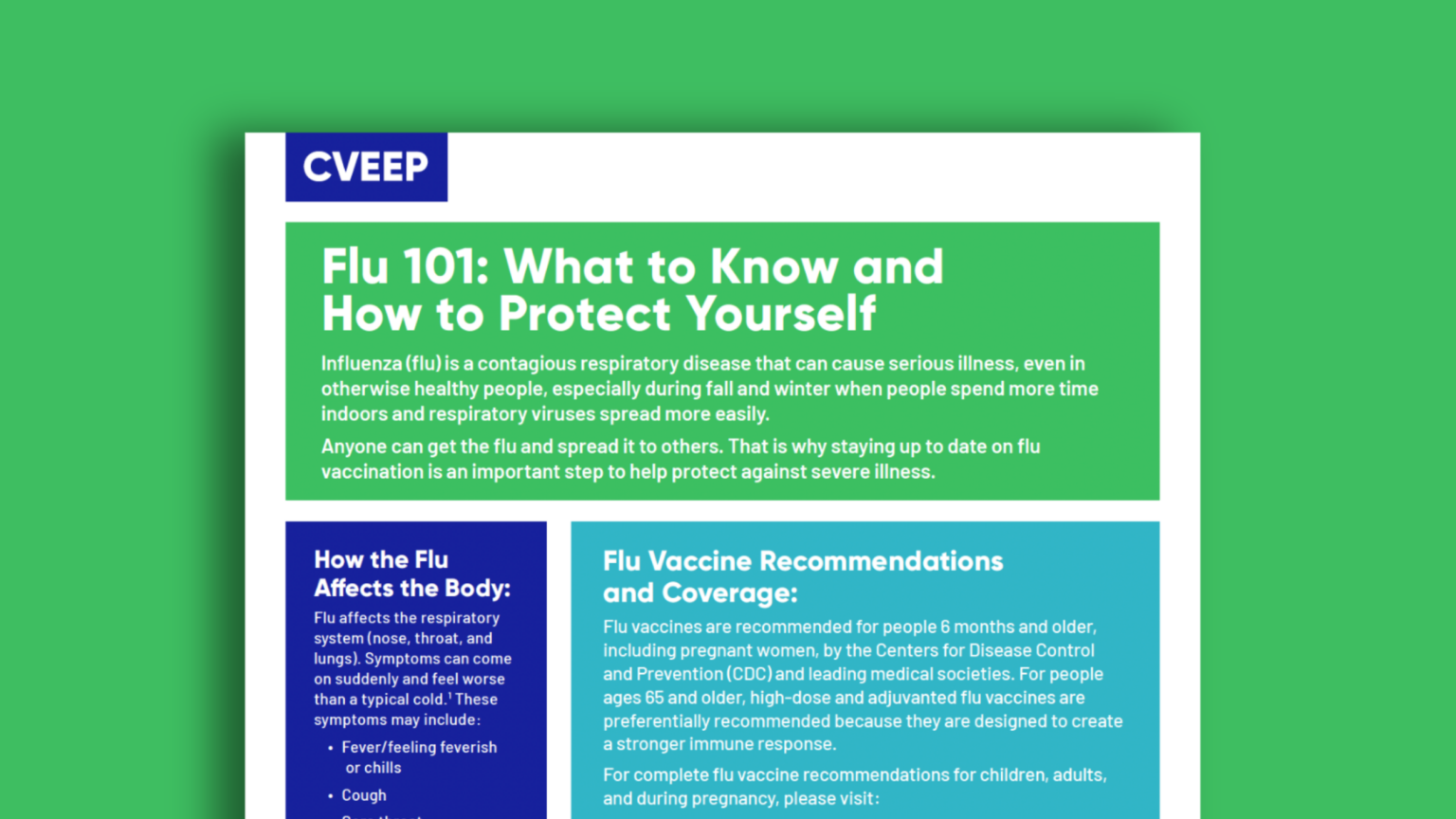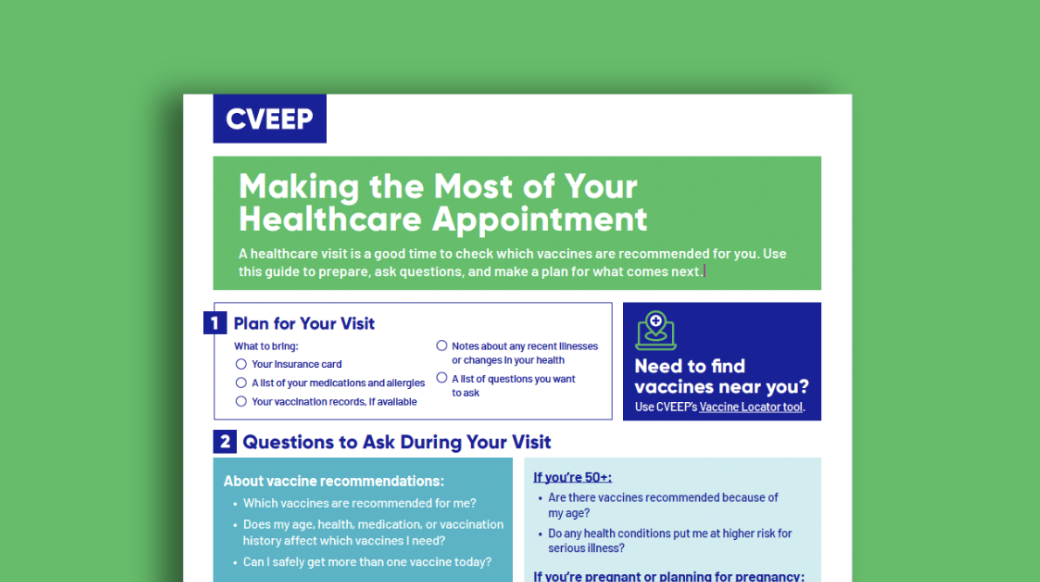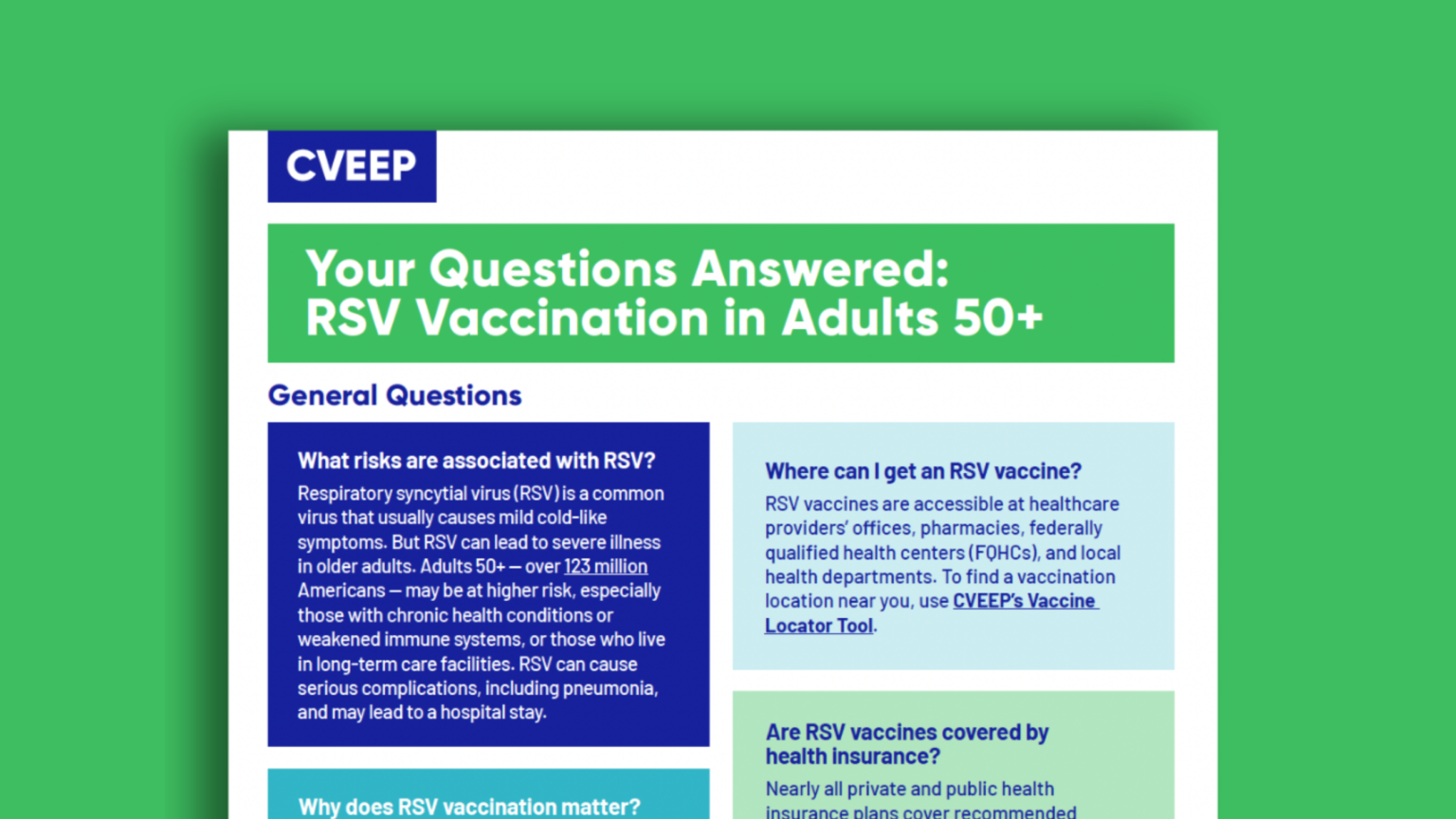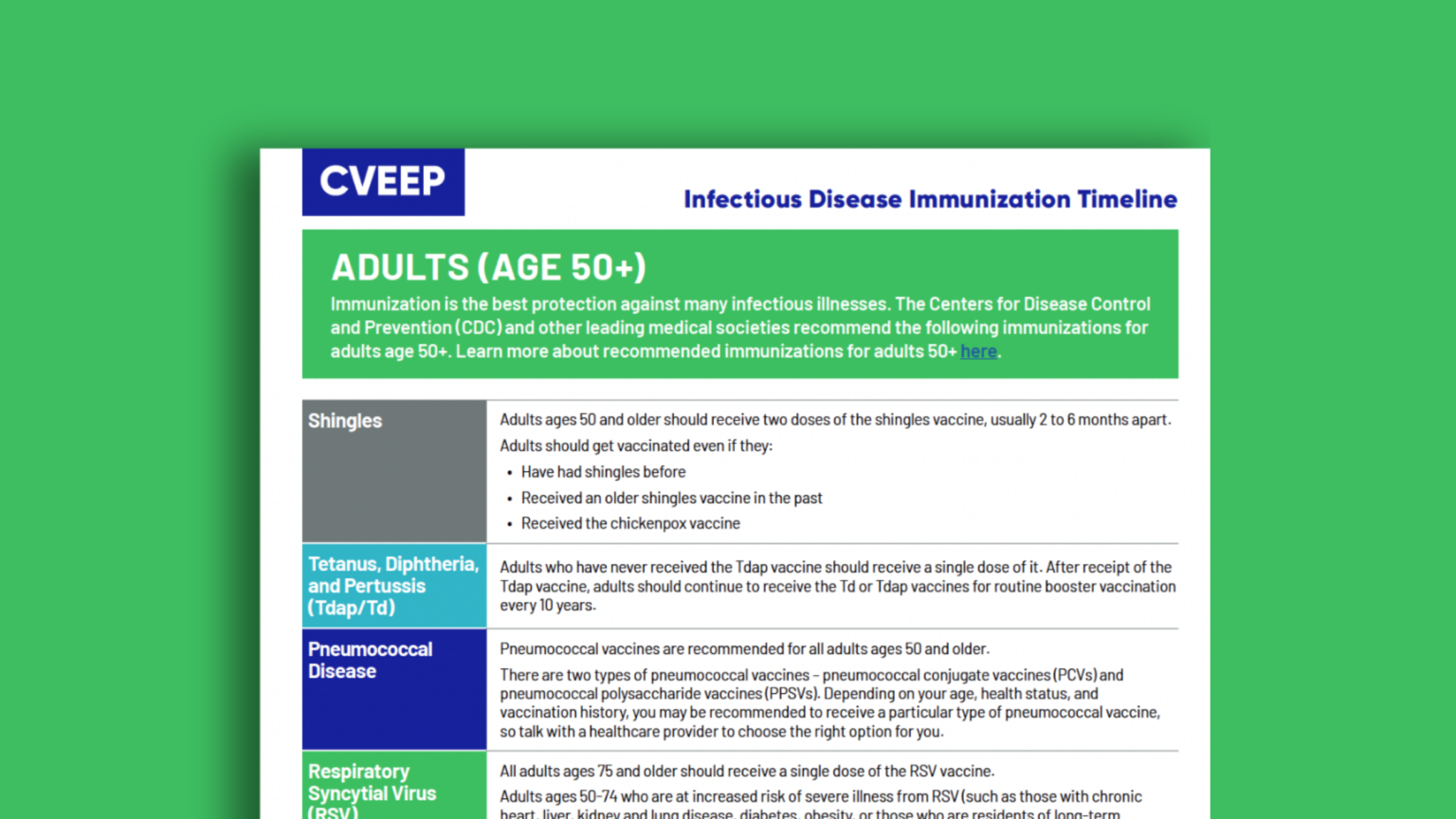
Older adults are at increased risk for serious illness from infectious diseases like COVID-19, flu, RSV, pneumococcal disease, and shingles. Aging naturally weakens the immune system, and chronic health conditions become more common over time. This makes it harder for the body to fight off infections and can lead to longer recovery times, and a higher likelihood of hospital stays. Staying up to date on recommended vaccines is an important step that older adults can take to help protect and maintain their health and independence.
In recognition of Older Americans Month, CVEEP held a webinar highlighting the role vaccines play in helping protect adults from severe illness. Experts in vaccines and aging provided information on why older adults are at increased risk for severe outcomes, which vaccines are recommended based on age and health status, and where to access them. Speakers also offered practical guidance for older adults and caregivers on how to have informed conversations with healthcare providers and steps to stay up to date on vaccines.
Panelists included:
Margot Savoy, MD, MPH, Chief Medical Officer, American Academy of Family Physicians (AAFP)
Chad Worz, PharmD, BCGP, CEO, American Society of Consultant Pharmacists (ASCP)
James Appleby, BSPharm, MPH, ScD (Hon), CEO, Gerontological Society of America
Moderator:Sue Peschin, President and CEO, Alliance for Aging Research
Keeping Children with Chronic Conditions Protected through Immunization
Last Updated04/28/2026
Children living with chronic health conditions — such as diabetes, heart disease, kidney disease and lung diseases like asthma — face a higher risk of serious complications from common infections like COVID-19, flu, RSV, and pneumococcal disease. While these illnesses can be mild for some, they can lead to a hospital stay, long-term health impacts, or even life-threatening outcomes for children with ongoing health conditions. Understanding these risks can help guide timely vaccination to help keep children protected against severe illness.
CVEEP held a discussion exploring the critical role of vaccines in keeping children most at risk healthy. Pediatric health and vaccine experts shared why children with chronic health conditions are at increased risk for severe outcomes, provided an overview of vaccine recommendations for children, and offered best practices for providers, parents, and caregivers to protect these vulnerable populations.
Panelists included:
David Hill, MD, FAAP, Co-Host of “Pediatrics On Call” Podcast and Spokesperson, American Academy of Pediatrics (AAP)
Patricia (Patsy) Stinchfield, RN, MS, CPNP, Immediate Past-President, National Foundation for Infectious Diseases
Moderator:Serese Marotta, Deputy Chief Executive Officer, Vaccinate Your Family
Infectious Respiratory Diseases | Vaccines
The Risks are Real: Amesh Adalja, MD, FIDSA
Dr. Amesh Adalja discusses the serious risks of infectious respiratory diseases, and the role that vaccines play in protecting against severe illness.
Last Updated04/23/2026
Vaccines
The Science Behind mRNA Vaccines
For over 20 years, mRNA technology has been researched, developed, and tested for use in vaccines against infectious diseases as well as for cancer immunotherapy. While the COVID-19 mRNA vaccines were the first approved for widespread use, they build on decades of research and are now among the most extensively studied medicines in history.
Pediatrician Dr. David Hill highlights how vaccines can teach children’s immune systems how to safely fight off infectious diseases before they even encounter them.
Last Updated03/30/2026
Immunocompromised | Vaccines
What to Know About Respiratory Vaccines If You Have Chronic Kidney Disease
This fact sheet explains why people living with chronic kidney disease face increased risks from respiratory infections such as RSV, pneumococcal disease, COVID-19, and influenza, and outlines which vaccines are recommended based on age and risk factors.
Last Updated03/10/2026
What to Know About Respiratory Vaccines If You Have Chronic Kidney Disease
What to Know About Respiratory Vaccines If You Have Asthma or Other Lung Conditions
This fact sheet explains why people living with asthma face increased risks from respiratory infections such as RSV, pneumococcal disease, COVID-19, and influenza, and outlines which vaccines are recommended based on age and risk factors.
Last Updated03/06/2026
What to Know About Respiratory Vaccines If You Have Asthma or Other Lung Conditions
Adult Immunization Trends and the Role of Vaccine Recommendations
Last Updated03/05/2026
Recent changes to recommendations for adult pneumococcal disease and RSV vaccines have created an important opportunity to assess how expanded vaccine recommendations translate into real-world vaccination practices. This webinar highlighted IQVIA data on adult vaccination trends, offering timely evidence of how vaccine recommendations can drive uptake.
Panelists explored the implications of routine, risk-based, and shared clinical decision-making vaccine recommendations for providers, patients, and public health systems. The conversation focused on how clarity in recommendations affects provider confidence and patient access, and what lessons recent ACIP decisions offer for the future of adult immunization policy.
Panelists included:
Nandini Selvam, PhD, MPH, President of Government Solutions, IQVIA
Robert H. Hopkins, Jr., MD, Medical Director, National Foundation for Infectious Diseases
Moderator:Lindsay Clarke, COO and Senior Vice President of Health Education, Alliance for Aging Research
Immunocompromised | Vaccines
What to Know About Respiratory Vaccines If You Have Heart Disease
This fact sheet explains why people living with heart disease face increased risks from respiratory infections such as RSV, pneumococcal disease, COVID-19, and influenza, and outlines which vaccines are recommended based on age and risk factors.
Last Updated02/24/2026
What to Know About Respiratory Vaccines If You Have Heart Disease