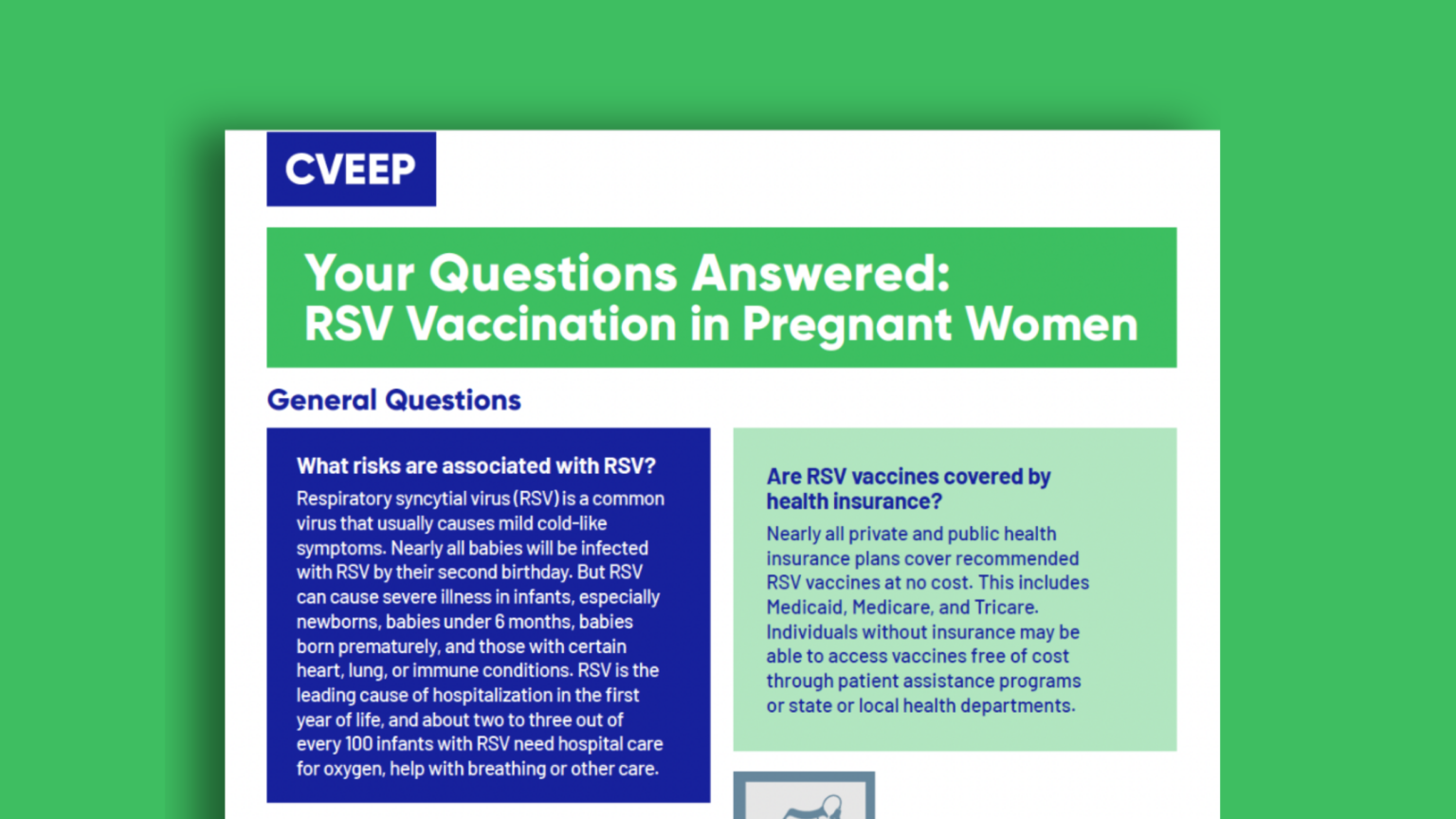
Your Questions Answered: RSV Vaccination in Pregnant Women
Research shows that recommended vaccines can help protect mothers, babies, or both, depending on the vaccine. The RSV vaccine is given during pregnancy to help protect babies from serious RSV illness in their first months of life.
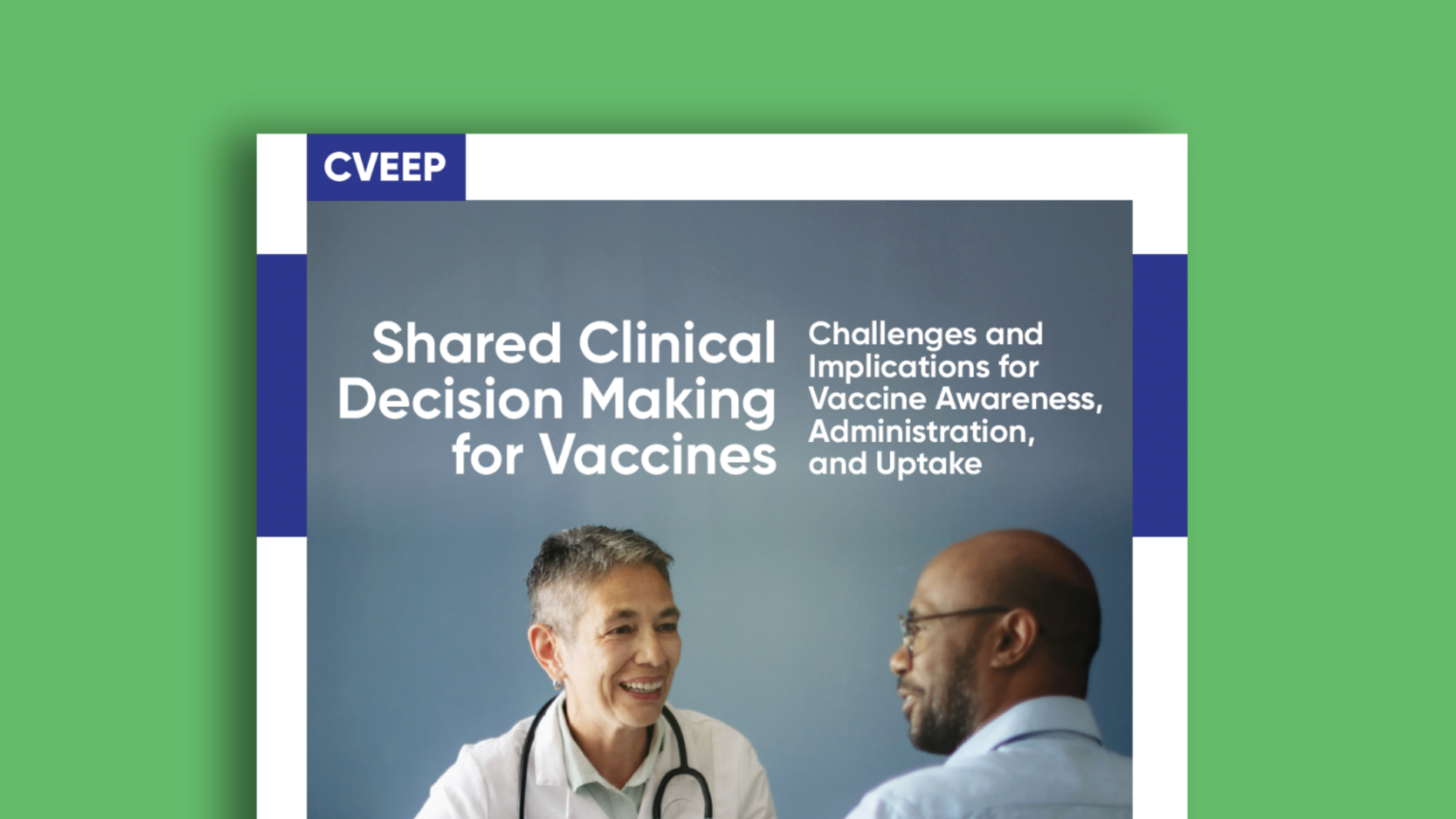
Shared Clinical Decision Making for Vaccines: Challenges and Implications for Vaccine Awareness, Administration, and Uptake
Learn more about shared clinical decision making (SCDM) and explore the challenges and implications of this recommendation and how it can impact providers, patients, vaccine management, and reimbursement.
Pediatric intensivist Dr. Margaret Scheffler explains how vaccines are the best tool we have to protect against severe illness.
Last Updated08/14/2026
Vaccines
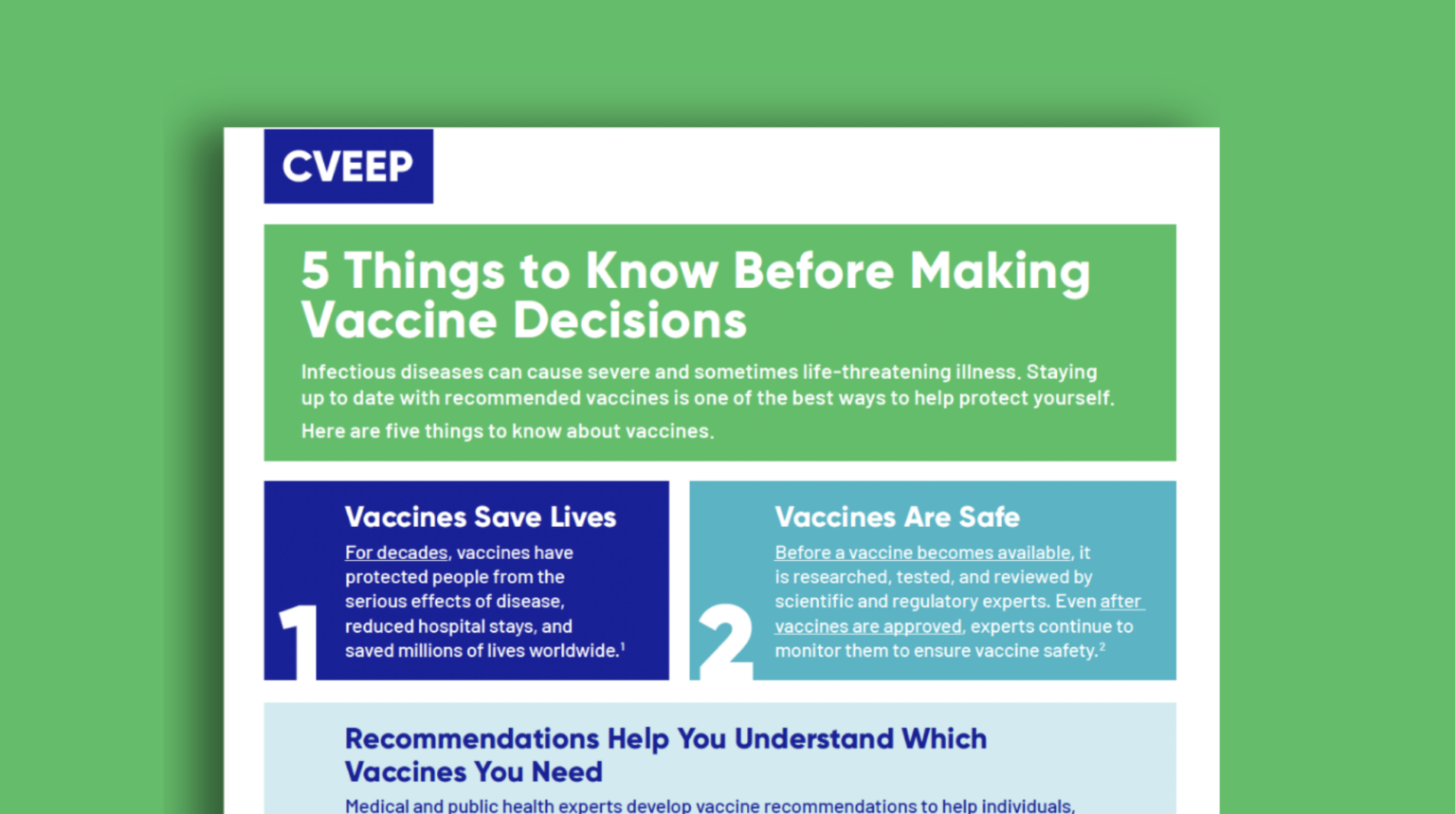
5 Things to Know Before Making Vaccine Decisions
Infectious diseases can cause severe and sometimes life-threatening illness. Staying up to date with recommended vaccines is one of the best ways to help protect yourself.
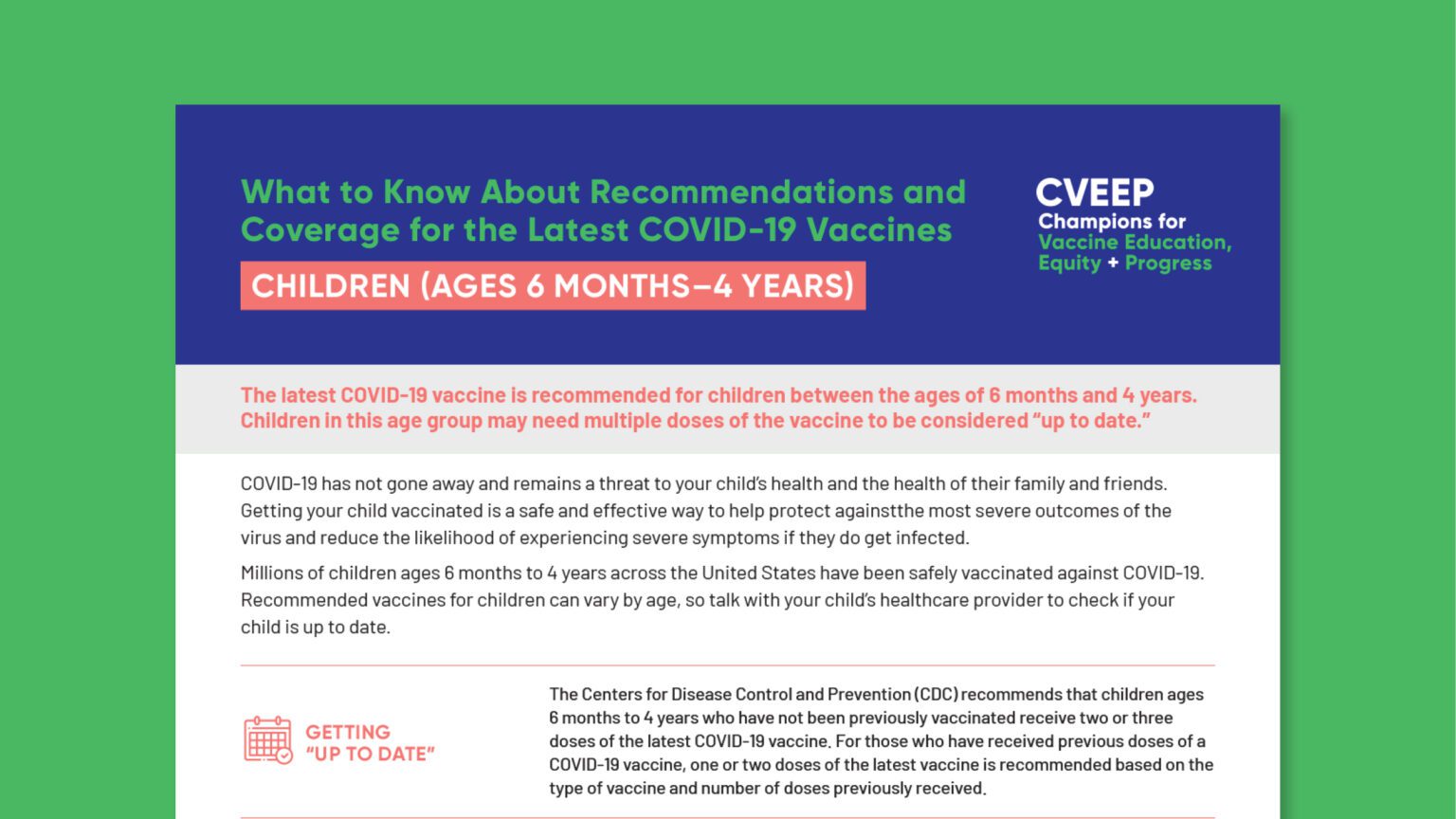
What to Know About Recommendations and Coverage for Updated COVID-19 Vaccines: Children (Ages 6 Months–4 Years)
Content on this page is being updated to reflect the FDA’s August 27 approval of the 2026–2027 COVID-19 vaccine formula. Please check back soon.
The latest COVID-19 vaccine is recommended for children between the ages of 6 months and 4 years. Children in this age group may need multiple doses of the vaccine to be considered “up to date.”
Last Updated08/14/2026
What to Know About Recommendations and Coverage for Updated COVID-19 Vaccines: Children (Ages 6 Months–4 Years)
*NOTE: COVID-19 and RSV vaccine recommendations have recently been updated for some populations. This resource will be updated to reflect the CDC’s latest guidance. Because CDC recommendations may impact insurance coverage, you should check with your insurance provider to make sure you’re covered.
COVID-19 | Childhood | Guidance | Vaccines
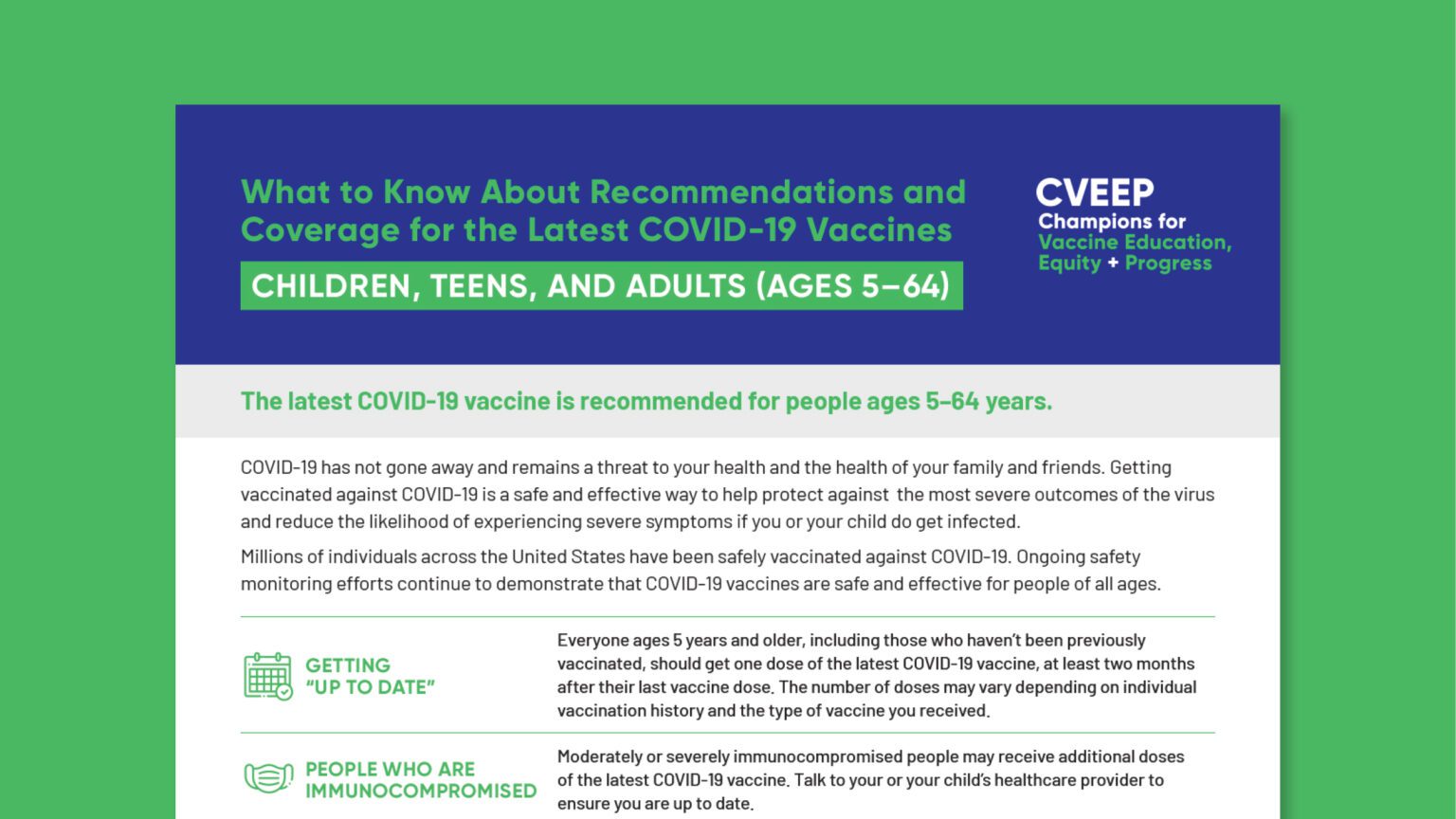
What to Know About Recommendations and Coverage for Updated COVID-19 Vaccines: Children, Teens, and Adults (Ages 5–64)
Content on this page is being updated to reflect the FDA’s August 27 approval of the 2026–2027 COVID-19 vaccine formula. Please check back soon.
The latest COVID-19 vaccine is recommended for people ages 5–64 years.
Last Updated08/14/2026
What to Know About Recommendations and Coverage for Updated COVID-19 Vaccines: Children, Teens, and Adults (Ages 5–64)
*NOTE: COVID-19 and RSV vaccine recommendations have recently been updated for some populations. This resource will be updated to reflect the CDC’s latest guidance. Because CDC recommendations may impact insurance coverage, you should check with your insurance provider to make sure you’re covered.
COVID-19 | Treatments | Vaccines
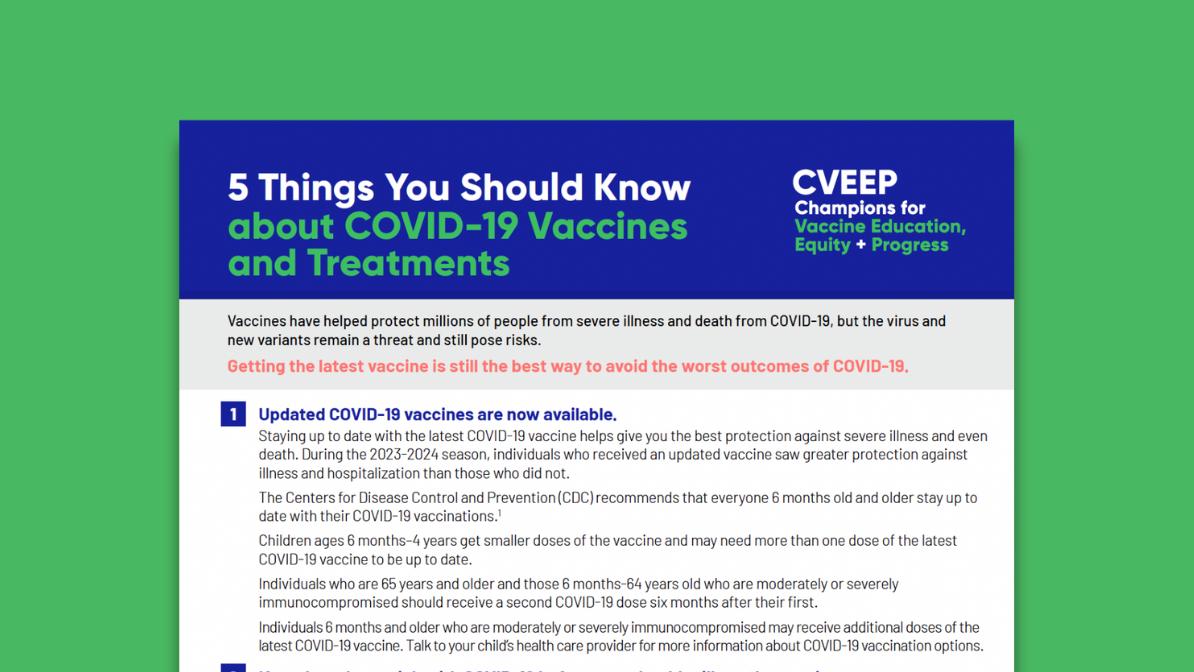
5 Things You Should Know About COVID-19 Vaccines and Treatments
Content on this page is being updated to reflect the FDA’s August 27 approval of the 2026–2027 COVID-19 vaccine formula. Please check back soon.
Vaccines have helped protect millions of people from severe illness and death from COVID-19, but the virus and new variants remain a threat and still pose risks. Getting the latest vaccine is still the best way to avoid the worst outcomes of COVID-19.
Last Updated08/14/2026
5 Things You Should Know About COVID-19 Vaccines and Treatments
*NOTE: COVID-19 and RSV vaccine recommendations have recently been updated for some populations. This resource will be updated to reflect the CDC’s latest guidance. Because CDC recommendations may impact insurance coverage, you should check with your insurance provider to make sure you’re covered.
Vaccines | Childhood
The Risks are Real: Gloria Barrera
Longtime school nurse Gloria Barrera discusses the impact of infectious respiratory diseases on children and their widespread impact on families and communities.
Last Updated08/10/2026
Cost and Coverage | Vaccines
Understanding Vaccine Coverage: What You Need to Know
Last Updated07/28/2026
Vaccines are one of the most effective tools to help protect against severe illness from infectious diseases. Fortunately, recommended vaccines are available at no cost through private insurance, Medicare, Medicaid, and the Vaccines for Children (VFC) program. However, understanding what is covered, where you can get vaccinated, and what steps to take if you have questions can be overwhelming.
CVEEP held a discussion on the current vaccine coverage landscape and what it means for vaccination this fall. Experts in healthcare coverage, public health, and vaccine policy explained the relationship between federal vaccine recommendations and insurance coverage, where to access recommended vaccines, and what to do if you encounter barriers at a pharmacy or healthcare provider’s office.
Panelists included:
Chris Regal, MS, Director of Clinical Innovation, AHIP
L.J Tan, PhD, MS, Chief Policy and Partnerships Officer, Immunize.org
The Risks are Real: Soren Mais, MGC Medical Student
Soren Mais, an MGC medical student, shares her personal experience with the severe effects of malaria and reflects on how access to preventive resources, including vaccination, could have changed her experience