COVID-19 Archives - CVEEP Skip to main content
COVID-19 | Older Adult

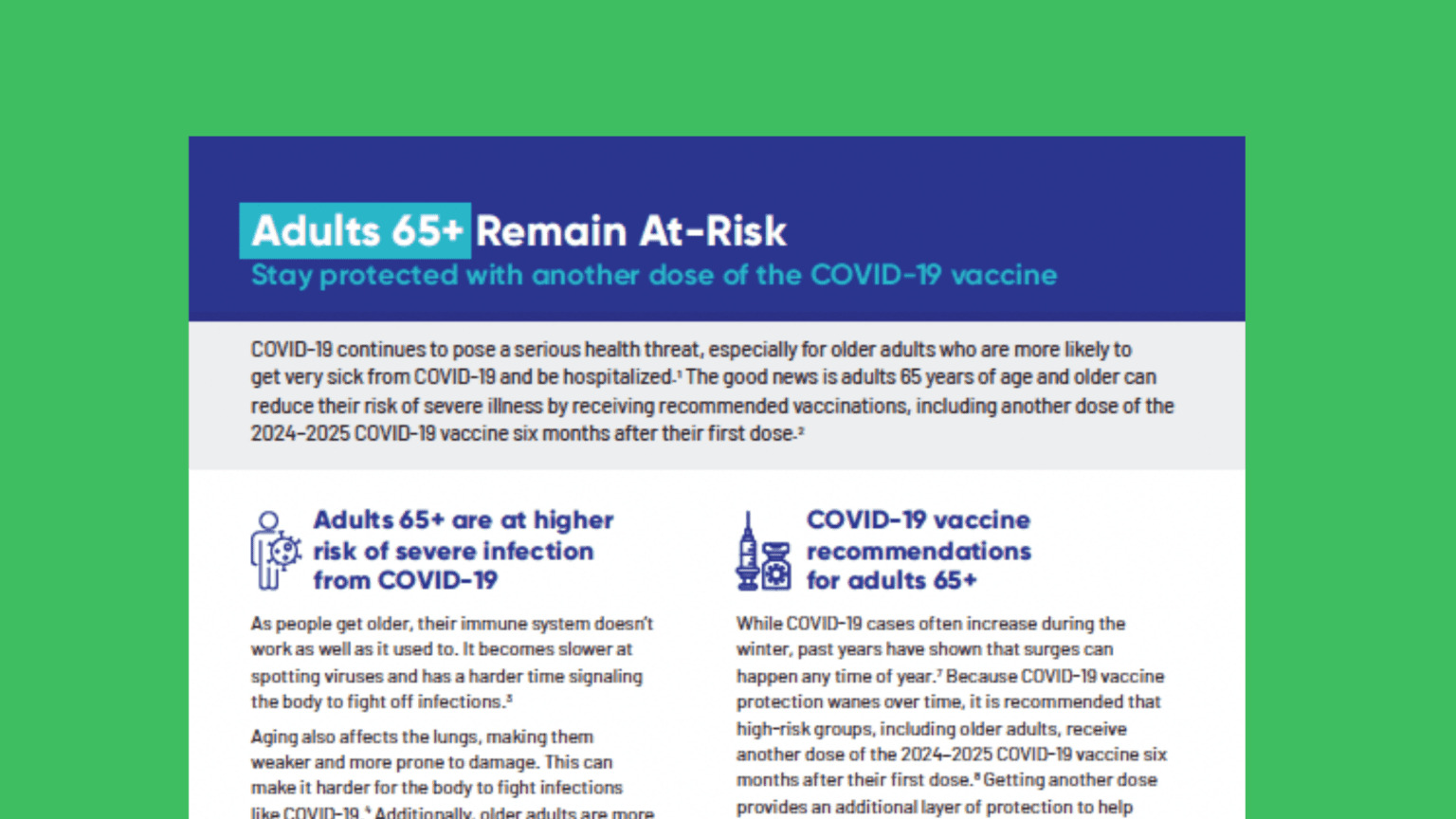
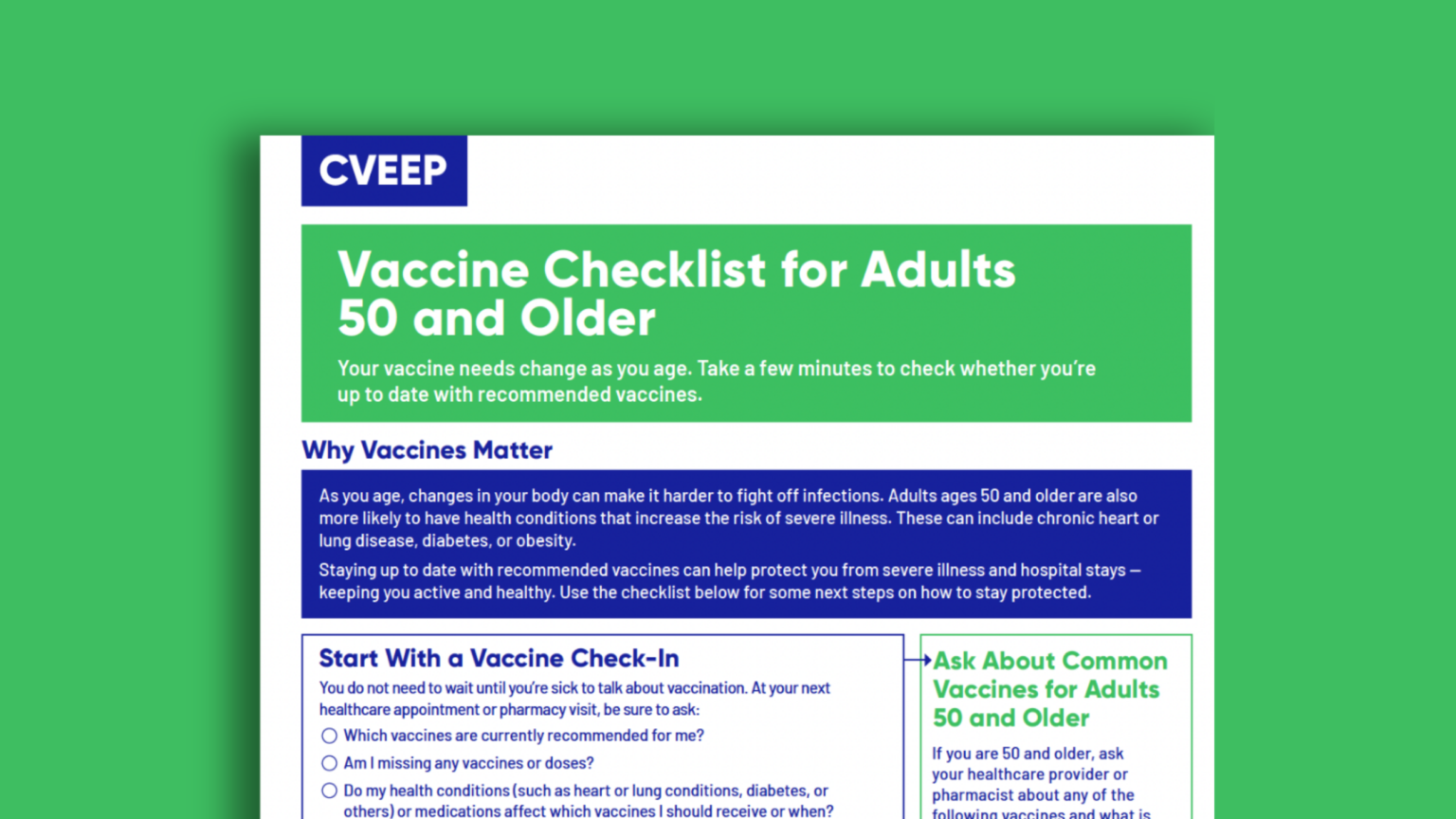
Risk Explainer — Adults 65+

COVID-19 continues to pose a serious health threat, especially for older adults who are more likely to get very sick from COVID-19 and be hospitalized. The good news is adults 65 years of age and older can reduce their risk of severe illness by receiving recommended vaccinations, including another dose of the 2024–2025 COVID-19 vaccine six months after their first dose.
Last Updated 08/14/2026
Risk Explainer — Adults 65+

COVID-19 | Childhood | Guidance | Vaccines

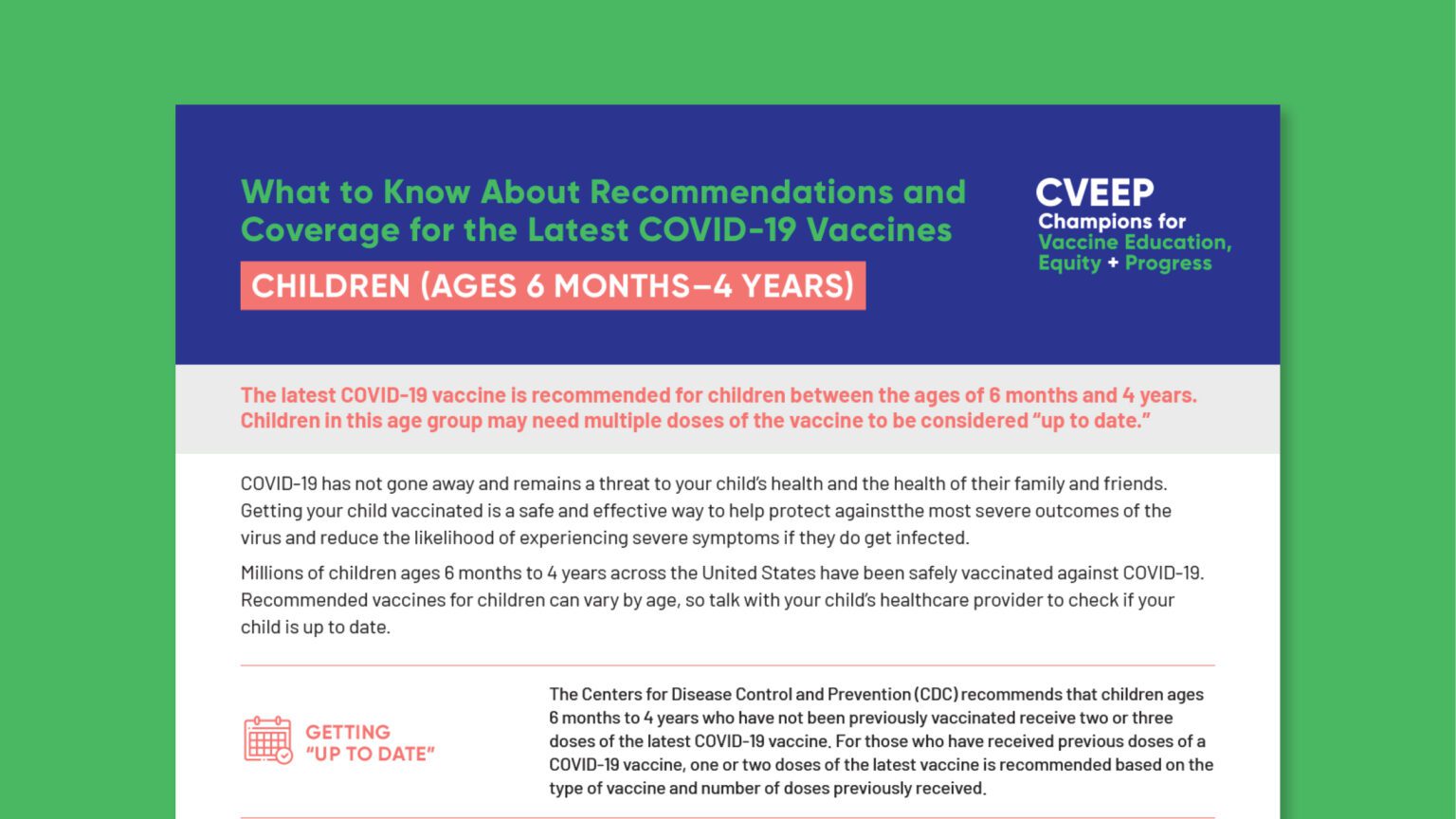
What to Know About Recommendations and Coverage for Updated COVID-19 Vaccines: Children (Ages 6 Months–4 Years)

The latest COVID-19 vaccine is recommended for children between the ages of 6 months and 4 years. Children in this age group may need multiple doses of the vaccine to be considered “up to date.”
Last Updated 08/14/2026
What to Know About Recommendations and Coverage for Updated COVID-19 Vaccines: Children (Ages 6 Months–4 Years)

*NOTE: COVID-19 and RSV vaccine recommendations have recently been updated for some populations. This resource will be updated to reflect the CDC’s latest guidance. Because CDC recommendations may impact insurance coverage, you should check with your insurance provider to make sure you’re covered.
COVID-19 | Childhood | Guidance | Vaccines

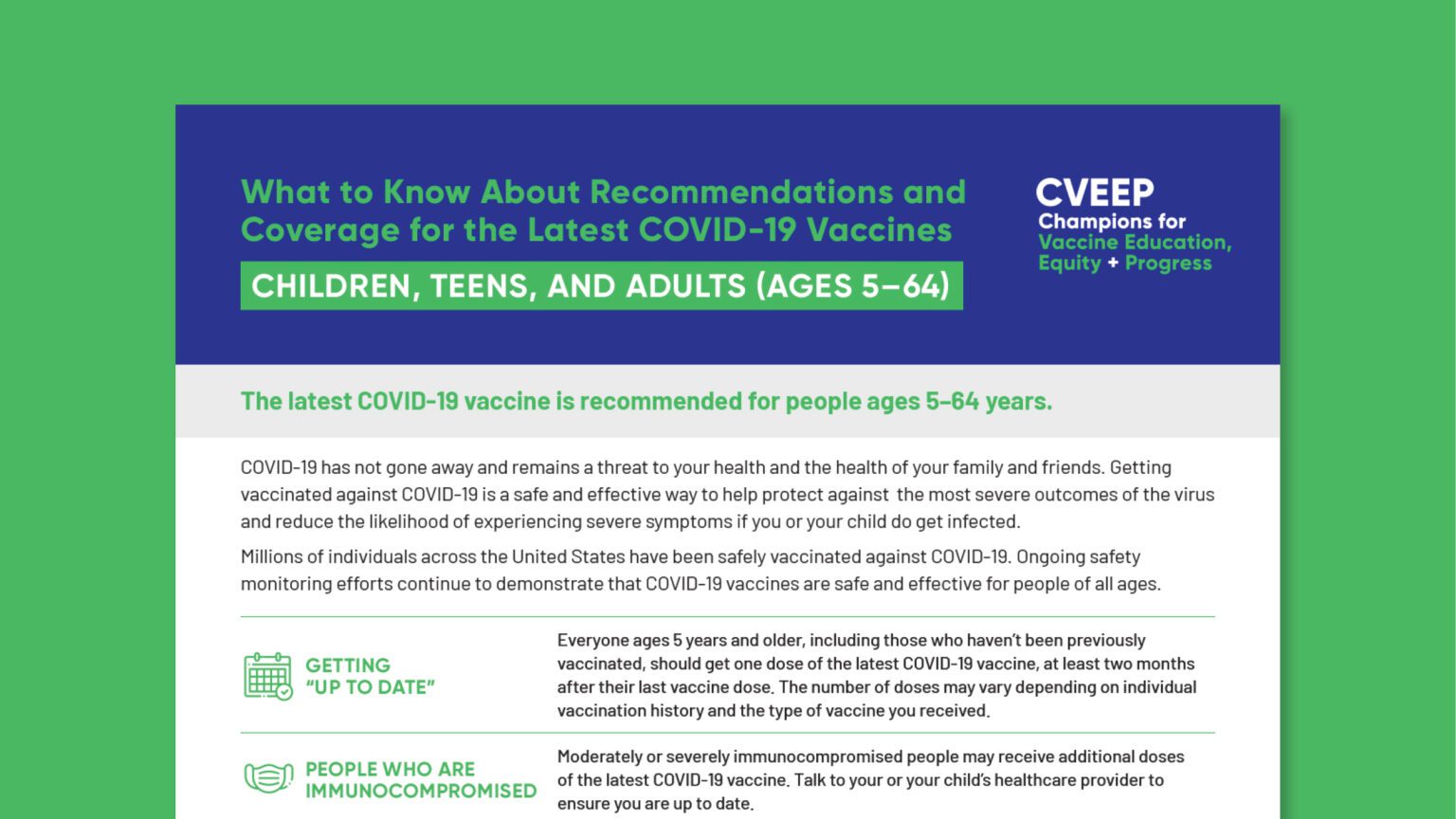
What to Know About Recommendations and Coverage for Updated COVID-19 Vaccines: Children, Teens, and Adults (Ages 5–64)

The latest COVID-19 vaccine is recommended for people ages 5–64 years.
Last Updated 08/14/2026
What to Know About Recommendations and Coverage for Updated COVID-19 Vaccines: Children, Teens, and Adults (Ages 5–64)

*NOTE: COVID-19 and RSV vaccine recommendations have recently been updated for some populations. This resource will be updated to reflect the CDC’s latest guidance. Because CDC recommendations may impact insurance coverage, you should check with your insurance provider to make sure you’re covered.
COVID-19 | Treatments | Vaccines

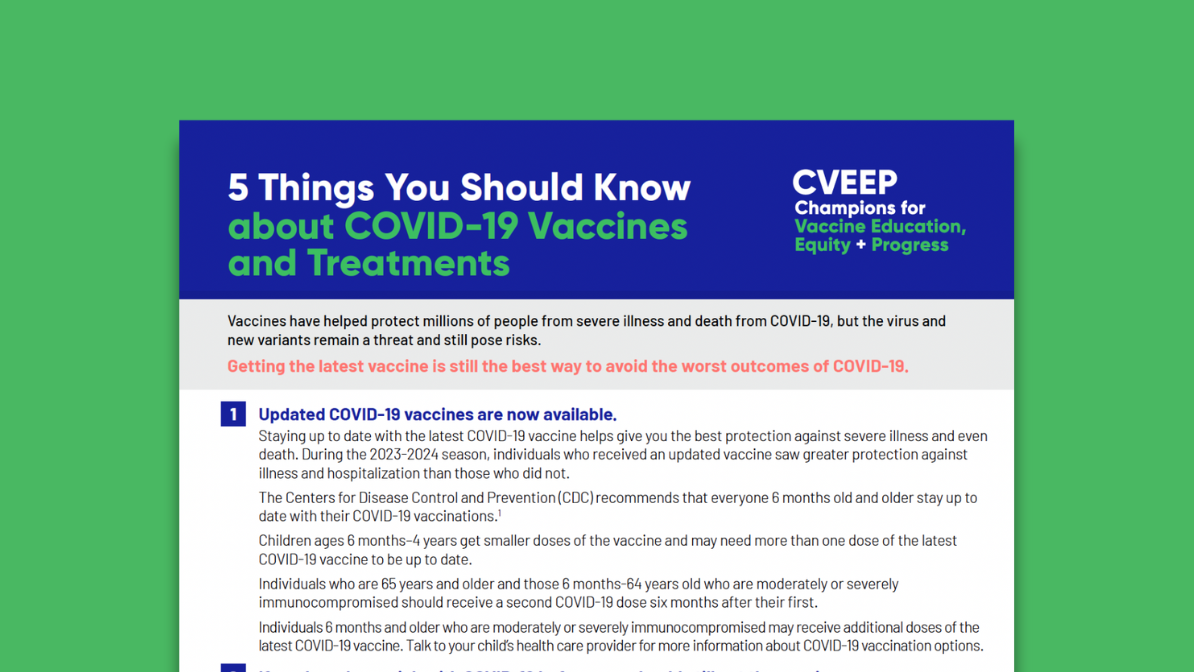
5 Things You Should Know About COVID-19 Vaccines and Treatments

Vaccines have helped protect millions of people from severe illness and death from COVID-19, but the virus and new variants remain a threat and still pose risks. Getting the latest vaccine is still the best way to avoid the worst outcomes of COVID-19.
Last Updated 08/14/2026
5 Things You Should Know About COVID-19 Vaccines and Treatments

*NOTE: COVID-19 and RSV vaccine recommendations have recently been updated for some populations. This resource will be updated to reflect the CDC’s latest guidance. Because CDC recommendations may impact insurance coverage, you should check with your insurance provider to make sure you’re covered.
Older Adult | COVID-19 | Flu | Pertussis (Whooping Cough) | Pneumococcal Disease | RSV | Vaccines

The Risks are Real: Nandini Selvam, PhD, MPH

Nandini Selvam, Vice President and General Manager of IQVIA, discusses why individuals underestimate the real risks of respiratory diseases and how vaccines remain the best way to prevent severe illness.
Last Updated 06/12/2026

Treatments | COVID-19 | Flu | Infectious Respiratory Diseases | RSV

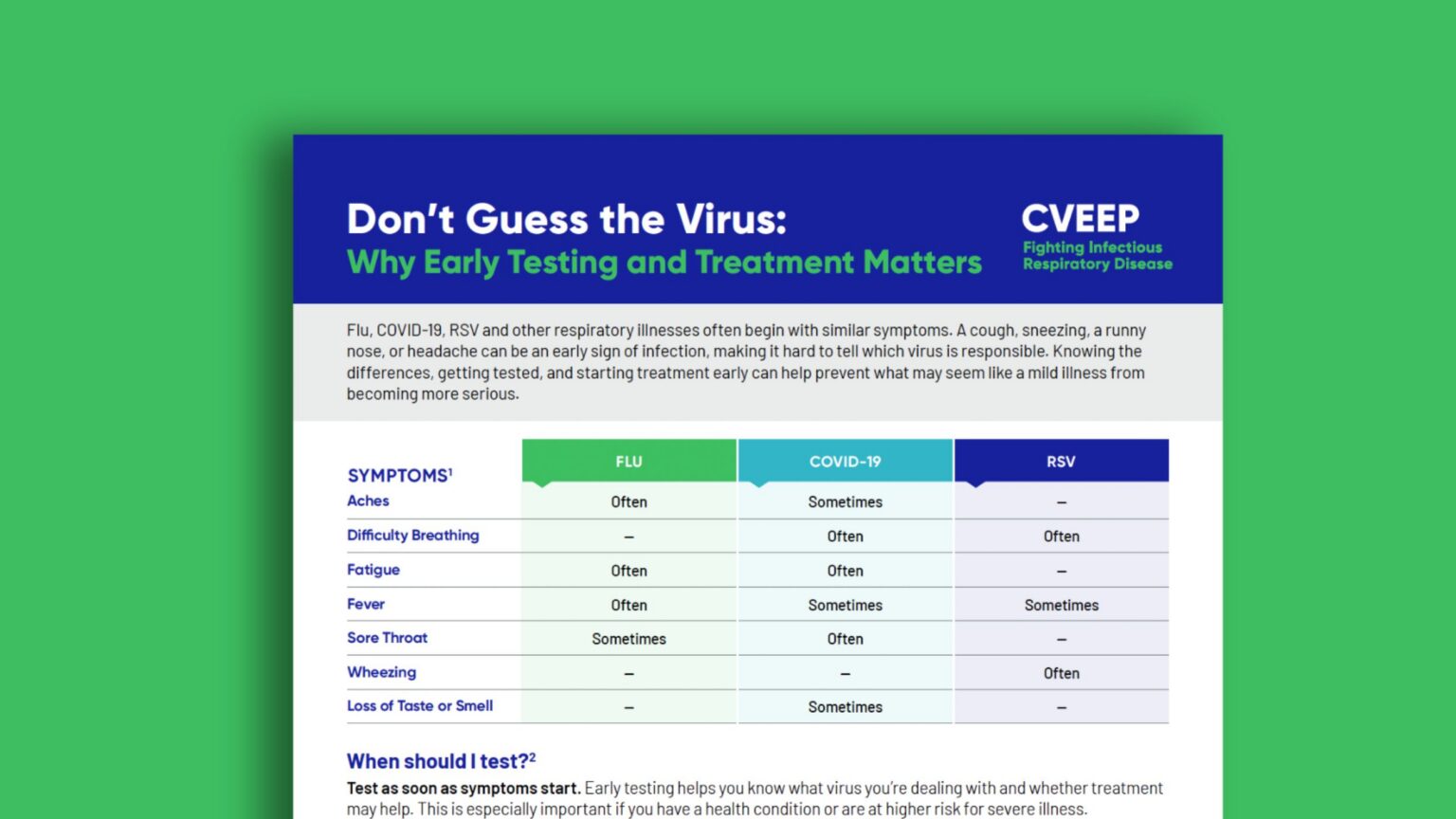
Don’t Guess the Virus: Why Early Testing and Treatment Matters

Flu, COVID-19, RSV and other respiratory illnesses often begin with similar symptoms. Knowing the differences, getting tested, and starting treatment early can help prevent what may seem like a mild illness from becoming more serious.
Last Updated 04/08/2026
Don’t Guess the Virus: Why Early Testing and Treatment Matters
COVID-19 | Flu | Older Adult

The Risks are Real: Barbara Resnick, PhD, RN, CRNP, FAAN, FAANP

Dr. Barbara Resnick, geriatric nurse practitioner and recognized leader in the field, reflects on the severe impacts of respiratory illness on her higher-risk patients.
Last Updated 02/23/2026
Vaccines | COVID-19

Explainer Video: The Science of How mRNA Vaccines Work

Last Updated 02/20/2026
Treatments | COVID-19 | Flu

Leveraging Antivirals Against Rising Rates of Flu and COVID-19

Last Updated 02/13/2026

As communities navigate the winter respiratory virus season, state and local health leaders are updating response plans to protect older adults, individuals with underlying medical conditions, and underserved populations. With vaccination rates declining and continued confusion about changing government guidance, the timely use of COVID-19 and influenza antivirals remains a critical, yet often underused, tool to reduce severe illness, preserve hospital capacity, and limit outbreaks.

CVEEP convened a webinar featuring a panel of clinical, public health, and community experts for a discussion of the latest guidance, any anticipated rise in COVID-19 infections, and how linking antiviral use to overall outbreak response plans can strengthen community preparedness. Participants gained practical insights to support testing-to-treatment pathways, align provider and pharmacy coordination, and promote access to care this respiratory season.

Panelists included:

Guidance | Childhood | COVID-19 | Flu | Pertussis (Whooping Cough) | Pneumococcal Disease | RSV | Vaccines

Infectious Respiratory Disease Immunization Timeline: Children and Adolescents (Ages 6-17)

Immunization is the best protection against many infectious respiratory illnesses. Vaccines strengthen our immune defenses and reduce the severity and spread of disease.
Last Updated 12/23/2025
Infectious Respiratory Disease Immunization Timeline: Children and Adolescents (Ages 6-17)