Know Your Risk: Certain Health Conditions Raise Your Risk of Serious Illness from COVID-19 and Flu
Know Your Risk
Know Your Risk
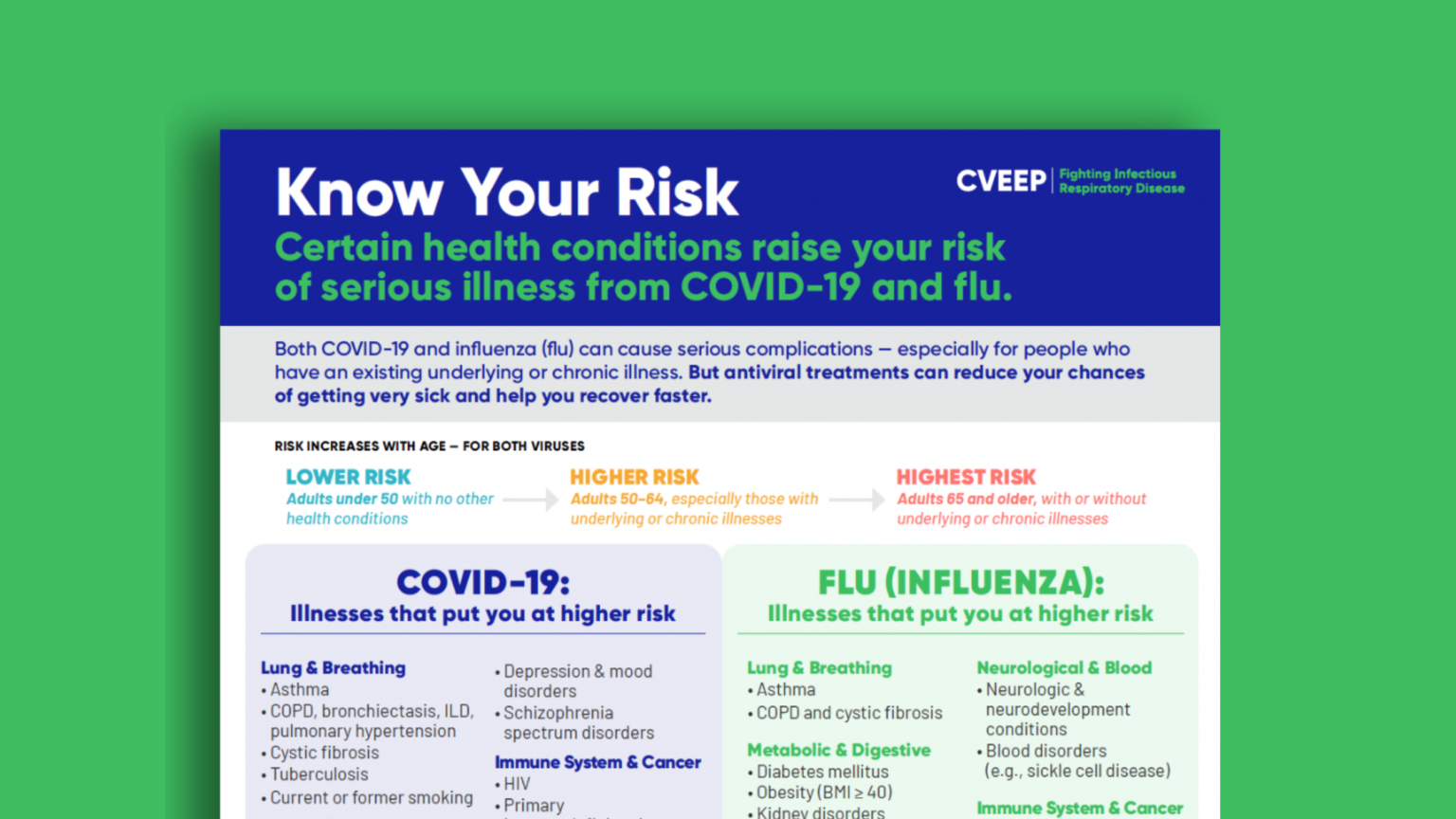
Certain health conditions raise your risk of serious illness from COVID-19 and flu.
Both COVID-19 and influenza (flu) can cause serious complications — especially for people who have an existing underlying or chronic illness. But antiviral treatments can reduce your chances of getting very sick and help you recover faster.
RISK INCREASES WITH AGE — FOR BOTH VIRUSES
LOWER RISK: Adults under 50 with no other health conditions
HIGHER RISK: Adults 50–64, especially those with underlying or chronic illnesses
HIGHEST RISK: Adults 65 and older, with or without underlying or chronic illnesses
Illnesses that put you at higher risk:
COVID
FLU (INFLUENZA)
Asthma
• COPD, bronchiectasis, ILD, pulmonary hypertension
• Cystic fibrosis
• Tuberculosis
• Current or former smoking
Metabolic & Digestive
• Diabetes (type 1 and 2)
• Obesity (BMI ≥ 30)
• Chronic kidney disease / dialysis
Heart & Circulation
• Heart disease
• Cerebrovascular / stroke-related disease
Neurological
• Dementia
• Parkinson’s disease
• Depression & mood disorders
• Schizophrenia spectrum disorders
Immune System & Cancer
• HIV
• Primary immunodeficiencies
• Organ or stem cell transplant
• Long-term steroid / immunosuppressant use
• Cancer (including blood cancers)
Other
• Pregnancy & recent pregnancy
• Disabilities, including Down syndrome
• Physical inactivity
Asthma
• COPD and cystic fibrosis
Metabolic & Digestive
• Diabetes mellitus
• Obesity (BMI ≥ 40)
• Kidney disorders
• Liver disorders
• Metabolic disorders (incl. mitochondrial disorders)
Heart & Circulation
• Congenital heart disease, heart failure, coronary artery disease
• History of stroke
Neurological & Blood
• Neurologic & neurodevelopment conditions
• Blood disorders (e.g., sickle cell disease)
Immune System & Cancer
• HIV / AIDS
• Cancer (e.g., leukemia)
• Chemotherapy, radiation, or immunosuppressant use
Other
• Pregnancy & recent pregnancy
• Disabilities, including Down syndrome
• Physical inactivity
Not a complete list of medical conditions. Some treatments may have side effects or interact with other medications you are taking, talk with your healthcare provider to help you make the best choice for your health.
ANTIVIRAL TREATMENTS CAN HELP
Getting tested and starting an antiviral treatment early can help prevent what may seem like a mild illness from becoming more serious.
STEPS YOU CAN TAKE TO PREVENT SERIOUS ILLNESS
1. Stay up to date on COVID-19 and flu vaccines
2. Talk to your doctor about your personal risk
3. Ask about antiviral options early if you get sick
SOURCES:
cdc.gov/covid/hcp/clinical-care/underlying-conditions.html
cdc.gov/flu/highrisk/index.html
cdc.gov/covid/treatment/index.html